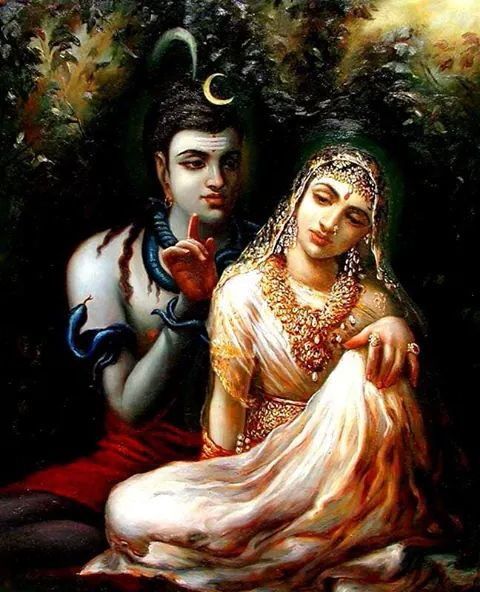
When we use the word Tantra in its traditional sense, we often refer to the teachings of Kashmiri Shaivism — or the wisdom derived from the ninety-two Tantras, known as Āgamas. These are revealed scriptures, forming the corpus of what the modern world now calls ‘non-duality’ (or non-dual Shaivite Tantra). We say they are revealed because their authorship is shrouded in mystery; their transmission is said to originate as dialog between Lord Shiva and the Divine Mother.
Tantra means practice. Unlike the Vedas, which emphasize theory and ritual obligation, the Tantras focus on direct, experiential methods — including (but not limited to) pūjā (worship), temple rites, mantra, initiation, yoga, and meditation. These practices were designed for the householder, not the ascetic, with a single aim: direct realization — the awakening of śakti (divine energy) and liberation (mokṣa) from saṃsāra, the endless cycle of suffering that binds us to the wheel of rebirth.
Liberation means freedom — the freedom to act as you are, unshackled from the conditioning of society and culture, free to live by your own vision of joy. When Kundalinī stirs, it is said that freedom itself cries out — struggling to break free from the knots of saṃskāras (karmic impressions) that bind consciousness, obstructed by lifetimes of sensory experience and mental conditioning. Breaking these bonds is no simple task. Hence, practice.
Of the ninety-two Tantras, sixty-four are purely monistic (non-dual), forming the foundation of the sixty-four arts of life. Eighteen are dual-non-dual, and ten are wholly dualistic. Yet there is no contradiction. Non-duality embraces duality as equally real — for if Two did not exist, how could One? (Now there’s a mind-bender for you.)
At the heart of the sixty-four monistic Tantras lie the Bhairava Tantras, whose essence is Trika Shaivism — the “threefold science of man and the universe.” In Trika, there are three energies:
- Parā (supreme)
- Parāparā (intermediate)
- Aparā (gross, or “lowest”)
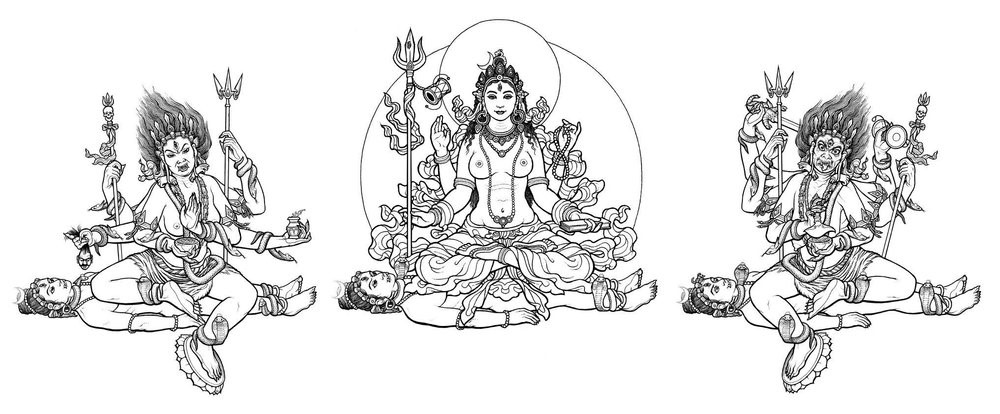
These three primordial energies govern all activity in the cosmos. They are the three faces of the Goddess, the three Kundalinis, the three bindus (points of creation) from which all reality emanates. They correspond to your lower, middle, and upper dantians (energy centers), aligning with the root, heart, and third-eye chakras — of any chakra system you may follow.
According to Trika, the entire universe — every action, whether spiritual, physical, or mundane — unfolds through these three energies.
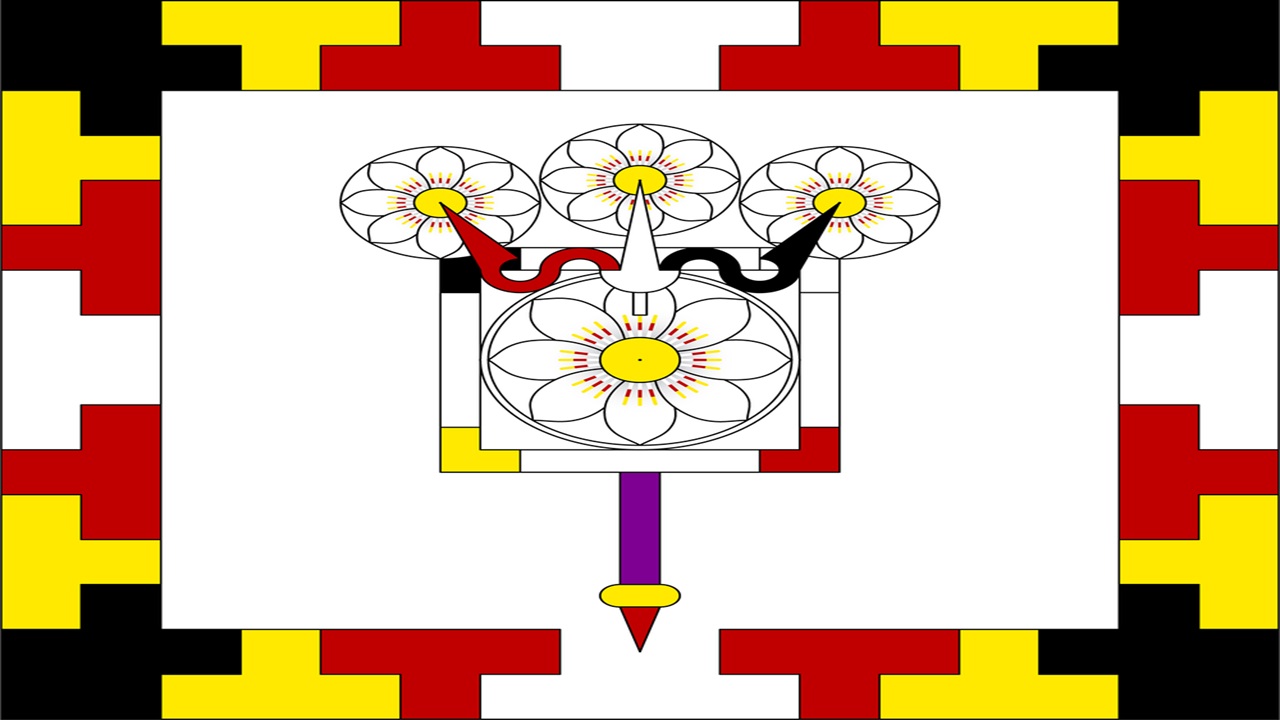
through the threefold energies into unity with Śiva
The true depth of Tantra shatters the popular myths — stories of incense-thick rooms, exoticized rituals, and whispered promises of “sacred sex.” What passes for Tantra in the modern world is, more often than not, a gilded shell: desire draped in the robes of spirituality.
Let’s be clear.
Tantra is not indulgence. It is not performance. And it is certainly not an escape into sensation.
Tantra is confrontation.
It is the moment your body ceases to be an object — of craving or shame — and ignites as a field of fire.
For millennia, the human form was not concealed but celebrated. The union of masculine and feminine was not reduced to fantasy but recognized as the living pulse of śakti — the same force you are now struggling to awaken.
This is precisely what the Shiv Linga points toward — though most have either mocked it into obscenity or drained it of meaning entirely.
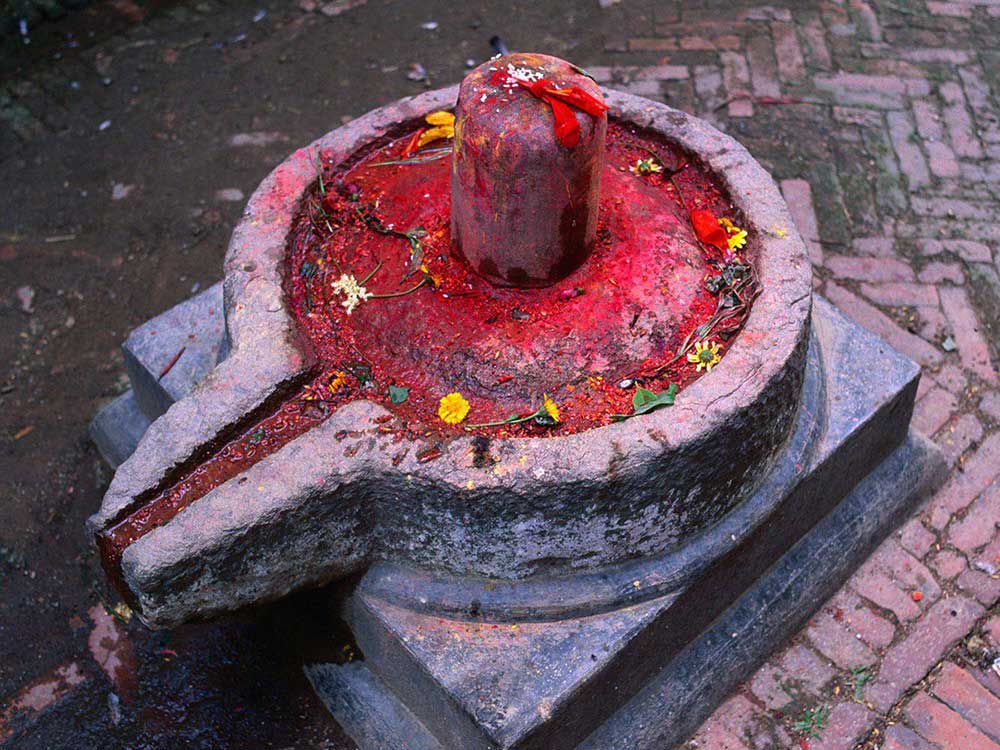
The word linga in Sanskrit means “sign” or “mark” — an arrow to the essence. Yes, it is embodied as the phallus of Shiva, resting within the yoni of Shakti. But to stop there — to collapse it into mere anatomy — is to miss the transmission entirely.
It is not pornography carved in stone. It is cosmology made flesh.
The linga and yoni are the most uncompromising diagram of creation itself. Not a distant God molding life from above, but existence arising through union. Through polarity. Through the meeting of forces that generate, sustain, and dissolve all worlds.
Everybody here was formed through that union. Not as belief — as biological fact. Tantra does not sanitize this. It sanctifies it.
And this is where the discomfort sets in.
Because many have been conditioned into a paradox: to participate in the act of creation, yet revile the organs and energies that make it possible. To arise from union — yet deny its divinity.
So when confronted with symbols like the linga and yoni, the mind does not recoil in offense — it flinches in recognition.
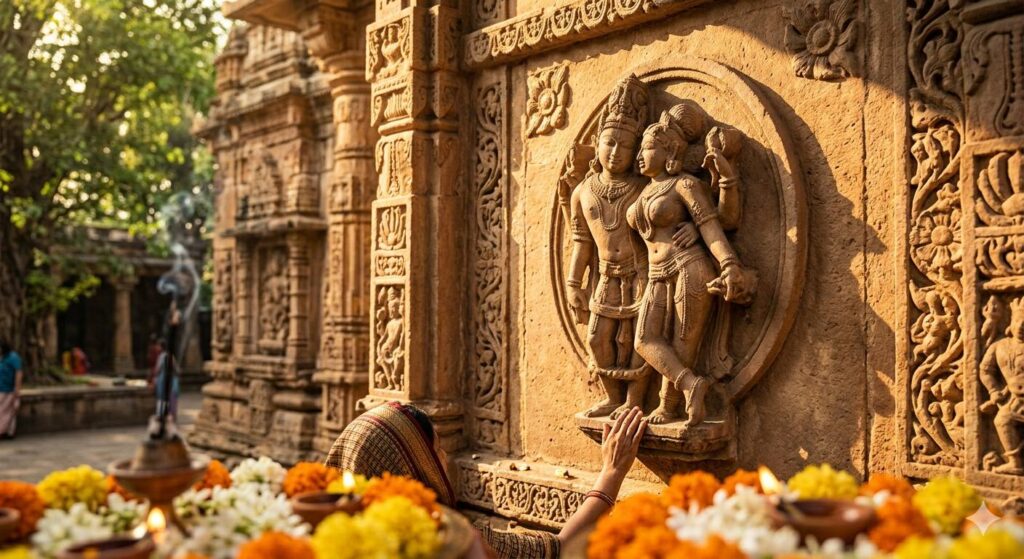
Ancient traditions held no such contradiction. Temples were adorned with bodies in union — not to provoke, but to instruct — to remind the seeker that nothing in existence stands outside the Divine. Not even this. Especially not this.
And yet today, the same force — the same current of creation — is either buried in shame, or plundered without reverence.
So again, the split deepens.
You long for Kundalinī to rise, to crack open the crown, to dissolve into the infinite, but you remain at war with the very gateway through which that force enters form.
Sexual energy is not separate from spiritual energy. It is the current. Distorted when unconscious — yes. But when met fully, it becomes the very fuel of awakening.
This does not mean indulgence. It means responsibility. The difference between compulsion and transmission. Between unconscious release and conscious refinement.
Tantra is the razor’s edge between the two.
And yes — this path can heal. Profoundly. For those carrying shame, trauma, or fragmentation, the reclamation of the body as sacred is not poetry — it is precision. It restores dignity. It returns sensation. It reclaims sovereignty over one’s own energy.
But do not romanticize it.
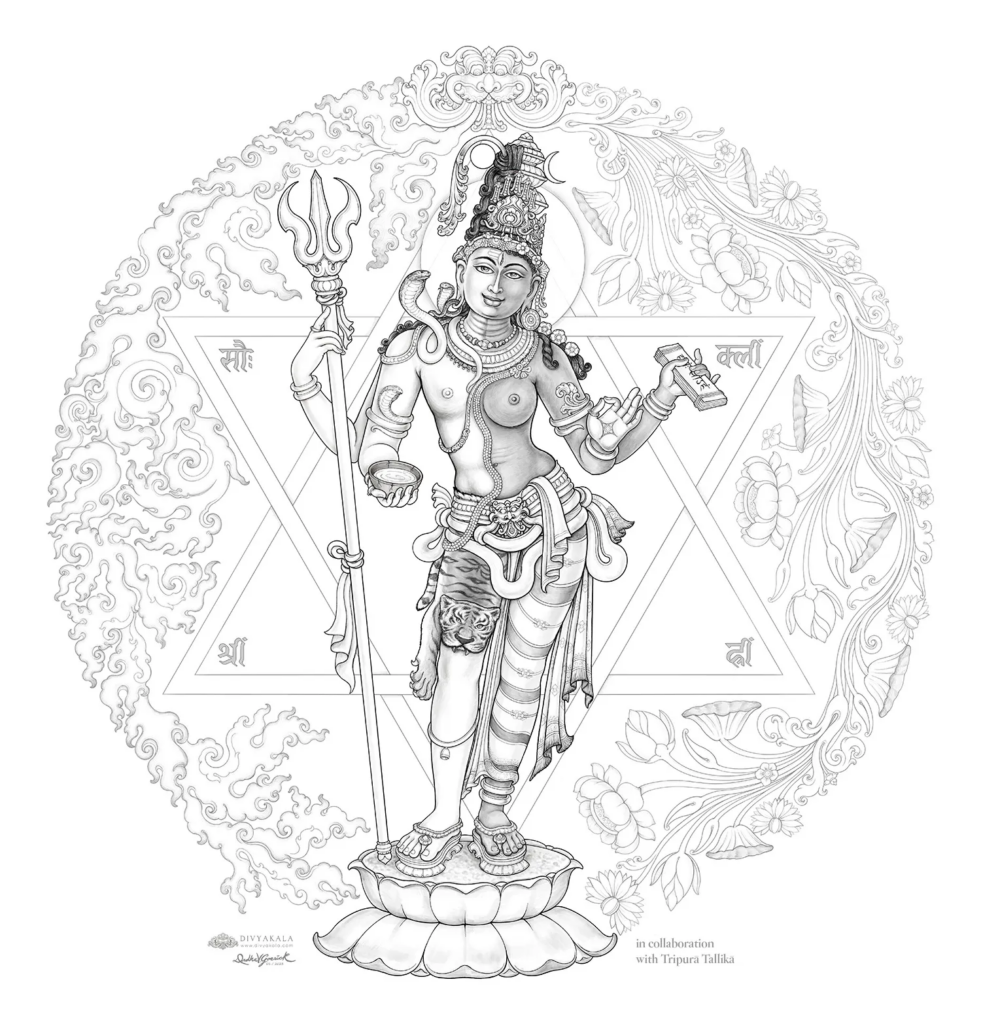
To treat the body as divine forfeits the right to desecrate it — your own or another’s. This is why true Tantra has always been dangerous — not because it is dark, but because it demands integrity.
At its core lies the living reality of Ardhanarishvara — the indivisible union of Shiva and Shakti, masculine and feminine, held not as opposition but as one inseparable pulse. Not mythology. The actual reconciliation of polarity within your own nerves and blood. The split you carry is not original. It was imposed. And it can be healed — but only by meeting both sides fully, without flinching from either.
Right-hand path. Left-hand path. Kaula. Different doors. Same fire.
Now watch what the modern mind does with all of this.
It tries to collapse the symbolic into the literal — then declares the whole thing a fraud when the literal crumbles.
The same reflex that reduces the linga to anatomy reaches toward Kailash. What if someone climbs it and proves Shiva isn’t there? As if satellites and drones haven’t already mapped every crevice of its frozen slopes.
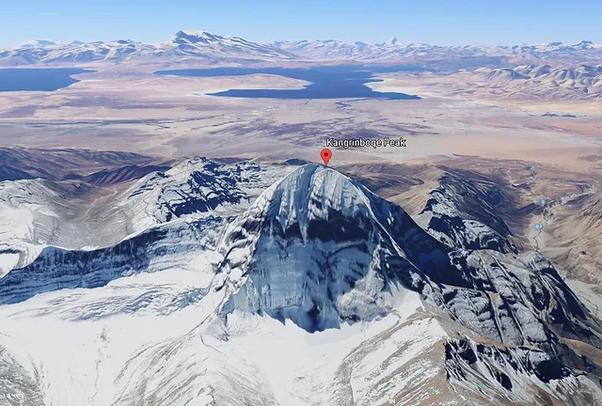
The question doesn’t fail because it’s wrong. It fails because it’s aimed at the wrong reality entirely.
Kailash is not merely Tibetan rock — just as the linga is not merely anatomy. Both are correspondences. Terrestrial echoes of something far more subtle. Thresholds. Symbols that point beyond what can be mapped, measured, or climbed.
The scriptures don’t describe a lifeless peak of stone and ice. They speak of a living, luminous realm — an inner cosmos, teeming and conscious. The physical mountain is sacred not because it contains Shiva — but because it vibrates with that higher reality.
The problem is not the symbol. It’s the atrophied gaze that no longer knows how to see. We reduce the sacred to the material — then scoff when the material fails to hold it. We chase awakening in the abstract — while spurning the very flesh through which it must arise.
Tantra was never asking you to believe in something. It was demanding you perceive differently.
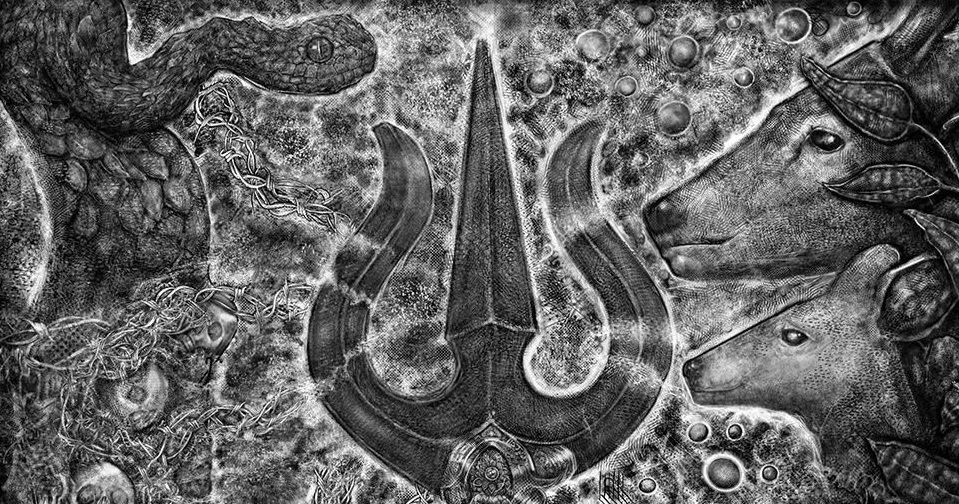
And if you’ve been listening, you know this is where we’ve been all along.
This is Trika.
Parā — the supreme, undivided awareness. The stillness beneath all movement. The Shiva that cannot be pinned to any mountain, because it is the ground from which all mountains rise.
Parāparā — the bridge. The subtle throb where awareness begins to taste itself. The realm of linga and yoni, of Kailash, of myth and meaning — where the infinite starts to take shape, but has not yet forgotten its own face.
Aparā — the manifest. The body. The breath. The union of flesh. The very sexuality so many have been taught to fear — this too is Śakti, fully expressed.
The three are not steps. They are one movement.
The linga and yoni are Aparā. Their meaning is Parāparā. Their essence is Parā.
Kailash as mountain is Aparā. Kailash as sacred symbol is Parāparā. Kailash as pure awareness is Parā.
Ardhanarishvara is not a division to be resolved — it is a wholeness to be recognized.
If you deny the body, you fracture the base. If you misread the symbol, you lose the bridge. If you chase the absolute while rejecting both — you remain split.
This is why Kundalinī does not rise cleanly for most. Not because the energy is blocked — but because perception is fragmented.
Trika is not asking you to choose — between spirit and matter, purity and desire, transcendence and embodiment. It is demanding you see that they were never two.
That the same force moving your breath… stirring your desire… shaping your thoughts… reaching toward liberation — is one unbroken current.
Three faces. One energy.
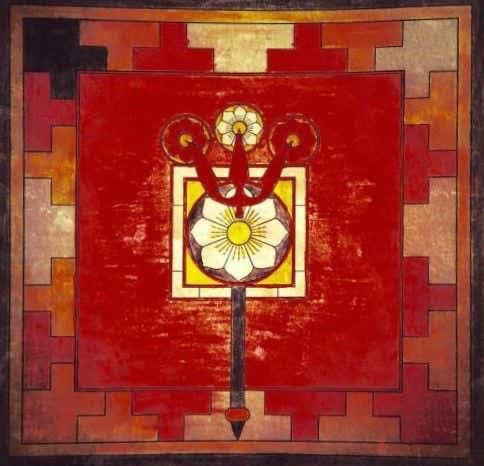
This is where your practice begins. Not in acquiring something new — but in the act of seeing clearly what was always already here.
Breath. Attention. The quality of presence you bring to your own body in this moment.
Not preparation for the path, but the path itself.
And once you see it — truly see it — there is no position left to retreat to. No comfortable distance between you and the current. No way to unknow what the body already knows.
That is the initiation this tradition has always offered.
Not belief. Not comfort.
Perception.

…is a natural mystic, Śaiva-Śākta Tantrika and Jñāna Yogī. David holds degrees in Eastern Philosophy and Semiotics, lives in Japan with his family, and works as an author and teacher of the wisdom traditions, devoting his time to developing science-based tools and programs that help people reach the fullest potential of the human condition. This site is the legacy of the Himalayan Ashram—Uma Maheshwara Yoga & Ayurveda (UmaMaYA).
Would you like to share this article?

Discover more from REAL YOGA
Subscribe to get the latest posts sent to your email.