
In the Tantrik chakra system, it is said there are 3 major knots of consciousness – the granthis. These energetic knots, nexuses of confabulated psychology, represent a kind of tension or entanglement within our awareness—patterns of fear, attachment, ego, or unresolved emotion—that bind our sense of self. It’s like a psychic tangle that prevents clear perception and spiritual flow. These granthi are found at major chakra locations or intersection points in the energy system, along the central channel where the vital forces converge. Each granthi is located near one of these powerful hubs. They are traditionally seen as points where the Kundalini energy can get blocked or encounter resistance as it rises.
A granthi serves a function; it’s not bad. Sometimes it serves as a vital anchor of your identity. Sometimes we lose flexibility and become bound to an aspect of our identities. Here is where cord-cutting rituals are intended to be applied—not externally, as in the case of ‘cutting’ karmic ties or generational patterns, but internally. We loosen a thread to free ourselves from a particular attachment that is past its due date and no longer serves us. They are part of human development—part of our psychic make-up. But in spiritual awakening, Kundalini must pierce these knots for higher consciousness to unfold.
The Three Granthis:
Brahma Granthi (The Knot of Brahmā)
Governing the primal engines of survival, instinct, and embodied fear
Seat: Mūlādhāra (Root) and Svādhiṣṭhāna (Sacral)
Current: Tamas — inertia, obscuration, heaviness, confusion, and forgetfulness
Brahmā Granthi rests at the base of the spine, between Root and Sacral — the oldest threshold of consciousness, where生命 first learned how to endure. Here the body remembers before the mind thinks. This knot functions as a primordial intelligence, a vestigial brain devoted to continuation at any cost. When Kuṇḍalinī is bound here, awareness contracts around the immediate and the necessary, fastening itself to the dense gravity of the mundane.
This is the realm of hunger and shelter, of reproduction and pleasure, of possession and protection. The Knot of Brahmā keeps consciousness occupied with acquiring and defending — food, safety, territory, comfort, survival itself. At this level, life is lived under the pall of avidyā: ignorance that is not stupidity, but forgetfulness of anything beyond endurance. Anxiety hums beneath the surface. Apathy settles in the bones. One moves, but does not arrive.
The world is apprehended through the ancient triad of flight, fight, and fear — with appetite as its fourth pole. Vitality bends before the dread of annihilation. The body tightens. The ground feels unreliable. In its extreme distortions, this knot births hopelessness and shame, guilt hardened into habit, selfishness mistaken for necessity. Being becomes a siege.
In the discipline of Haṭha Yoga, Mūla Bandha and Prāṇāyāma are employed within various kriyās to awaken and untie this obstruction. Breath is refined. The root is sealed and steadied. When Brahmā Granthi is pierced, Kuṇḍalinī lifts from her most compressed state, rising through Root and Sacral toward the Solar Plexus and the Heart — into subtler terrain where choice replaces compulsion.
This ascent loosens the grip of instinct. Fear no longer governs motion. The individual is released from the tyranny of survival and introduced, for the first time, to trust. The earth ceases to be an enemy, and incarnation is no longer a burden to be carried — but a ground from which consciousness may stand and ascend.
Vishnu Granthi (The Knot of Viṣṇu)
Governing the tides of love, passion, and the architecture of emotion
Seat: Maṇipūra (Sacral) and Anāhata (Heart)
Current: Rajas — individuation, ambition, heat, motion, and the gravity of selfhood
Viṣṇu Granthi lies suspended between the Sacral and the Heart — a liminal crossing where desire refines itself into devotion, and power begins to masquerade as love. These centers, luminous and perilous, govern emotional entanglement, attachment, and the flowering of subtle psychic capacities. Here the knot binds the aspirant to the sweetness of self-cherishing, fastening consciousness to its harvests — talents, virtues, powers — in a ceaseless orbit around becoming someone.
At this stratum of awareness, the ego reigns not as brute instinct but as charisma. Passion surges. Ambition sanctifies itself. The seeker is animated by devotion and generosity, yet tethered to self-importance and pride. Attachment to siddhis—subtle powers, recognitions, confirmations—becomes its own intoxication. A peculiar alchemy takes hold: one may act benevolently, even self-sacrificially, while quietly enthroning oneself as more awake, more worthy, more chosen. Holiness begins to look like hierarchy.
Though compassion flows, separation remains intact. The world is still divided into self and other, giver and recipient, enlightened and unenlightened. Duality survives under the guise of virtue. Fame is courted, if subtly. Possessions are justified. Identity hardens around the role of benefactor, mystic, healer, exemplar. Individuality, no longer coarse, tightens its golden chains.
In the discipline of Haṭha Yoga, Uḍḍīyāna Bandha—the lifting of the abdominal center—is applied to pierce Viṣṇu Granthi. This action draws together Prāṇa, Apāna, and Samāna Vāyu, uniting forces that had been dispersed in service of self-maintenance. Symbolically, the knot is undone by relinquishing ownership of one’s virtues and powers. Service without self-reference dawns. As the chains of individuality loosen, Kuṇḍalinī rises unhindered, ascending into Anāhata—where love is no longer possessed, and compassion no longer needs a center.
Here, devotion exhales its final demand: to belong to no one, not even oneself.
Rudra Granthi (The Knot of Shiva)
Governing the hidden dominion of intellect and its subtlest pride
Seat: Viśuddhi (throat) and Ājñā (3rd Eye)
Current: Sattva — clarity, balance, creative luminosity, the refined ease of harmony
Rudra Granthi abides in the kingdom of the Ājñā Chakra, the inner brow where sight turns inward and thought begins to dissolve into knowing. This is the final knot set before the yogi — the last threshold that bars the ascent. Here, Iḍā, Piṅgalā, and Suṣumṇā converge, braiding themselves into a single channel poised before the Crown. Yet the gate does not open easily. The knot of Rudra binds Kuṇḍalinī to the subtlest attachments of mind, arresting her flight toward the Highest by fastening consciousness to its own constructions.
By this stage, the coarse hungers of the animal body have long been left behind. Desire has refined itself into thought. Aspiration has clothed itself in intelligence. But the intellect, dazzling as it is, cannot easily discern the difference between true Self-knowledge and the glittering archive of accumulated ideas. Here arise the shadows of refinement: hauteur disguised as wisdom, certainty mistaken for insight, prejudice sanctified by sophistication. This is the arrogance of the luminous mind — subtle, persuasive, and deeply entrancing. Only jñāna, direct knowing of the Self, can pierce it.
To break Rudra Granthi is to consent to annihilation — not of awareness, but of the one who claims it. The ego, even in its most exalted and spiritualized form, must be undone. In the discipline of Haṭha Yoga, practices such as Jālandhara Bandha, Khecarī Mudrā, and Śāmbhavī Mudrā are employed to lift the final veil — the illusion of otherness that still cleaves subject from object, seeker from sought. When this knot yields, the passage to Sahasrāra unfurls.
And then there is no ascent, no attainment — only the eternal immediacy of Now. The individual self does not rise into the Universal; it is revealed never to have been separate. What remains is cosmic consciousness, self-luminous and without center — Śiva awake to Himself, gazing through every eye.
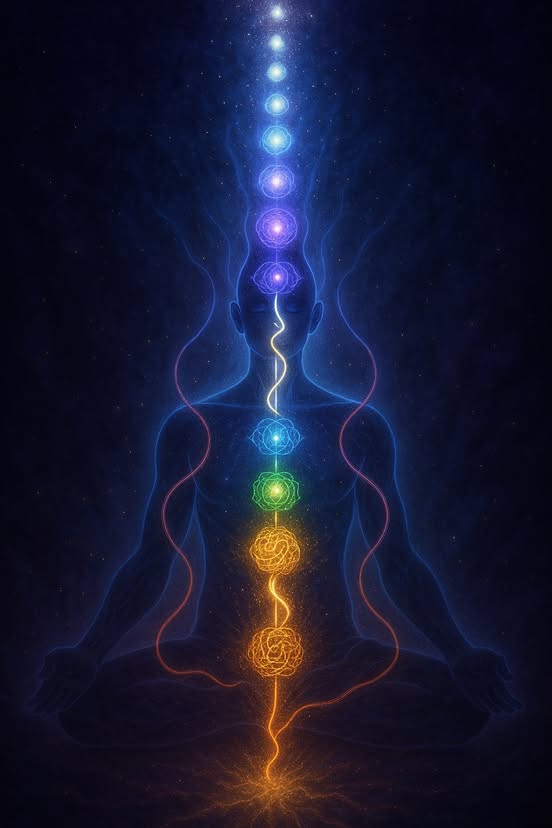
The 4th Granthi — Māyā
In some teachings, Māyā Granthi refers to the extraordinarily subtle residual tendency to perceive multiplicity as ultimately real—even after major awakening experiences. In other words, not merely ego, but the very architecture of subject-object perception.
A practitioner may have profound samādhi, siddhis, visions, devotion, or even nondual insight, while traces of māyā still subtly organize experience.
This is an incredibly subtle teaching.
When Kundalini (a.k.a. awakening awareness) moves through these knots and encounters a blockage, the discomfort or challenges can vary depending on which granthi is being affected. For example:
Brahma Granthi (Root Chakra / Muladhara)
Physical discomfort: This knot is associated with primal fears, survival instincts, and attachment to the physical world. If energy gets blocked here, you may experience intense sensations in the pelvic region, lower back, or legs—often described as a feeling of heaviness, tightness, or pressure. There may also be a sense of restlessness or difficulty grounding.
Emotional discomfort: Deep-seated fears related to safety, security, and belonging might surface. You may feel a sense of insecurity or fear about survival, finances, or basic needs.
Mental discomfort: Feelings of being stuck or trapped in your life situation can arise, as well as an inability to move forward or manifest your goals.
Vishnu Granthi (Heart Chakra / Anahata)
Physical discomfort: The blockage in the heart chakra can lead to sensations of tightness or constriction in the chest, lungs, or upper back. There may be a sensation of being choked, difficulty breathing deeply, or even mild heart palpitations.
Emotional discomfort: Blockages in this area can bring up unprocessed grief, emotional pain, or unresolved trauma, especially related to love, relationships, or self-worth. There might be an overwhelming sense of loneliness, isolation, or emotional numbness.
Mental discomfort: If the heart center is blocked, you might struggle with feelings of emotional fragmentation, a lack of empathy, or difficulty expressing affection or love toward yourself or others. There may be an inability to forgive or let go of past hurts.
Rudra Granthi (Throat Chakra / Vishuddha)
Physical discomfort: This granthi governs expression and communication. When blocked, you may experience tightness, soreness, or discomfort in the throat, jaw, neck, or even the mouth. It can feel like there’s a lump in the throat or difficulty swallowing. There may also be tension headaches or jaw clenching.
Emotional discomfort: Blockages here are often associated with fear of expressing oneself or feeling misunderstood. You might experience frustration, irritability, or a sense of being unheard or silenced. Unspoken truths or repressed emotions might cause anxiety or discomfort.
Mental discomfort: The inability to communicate clearly or authentically can create internal conflict. This blockage might bring about feelings of self-doubt or confusion around one’s identity and how to express one’s true thoughts or feelings.
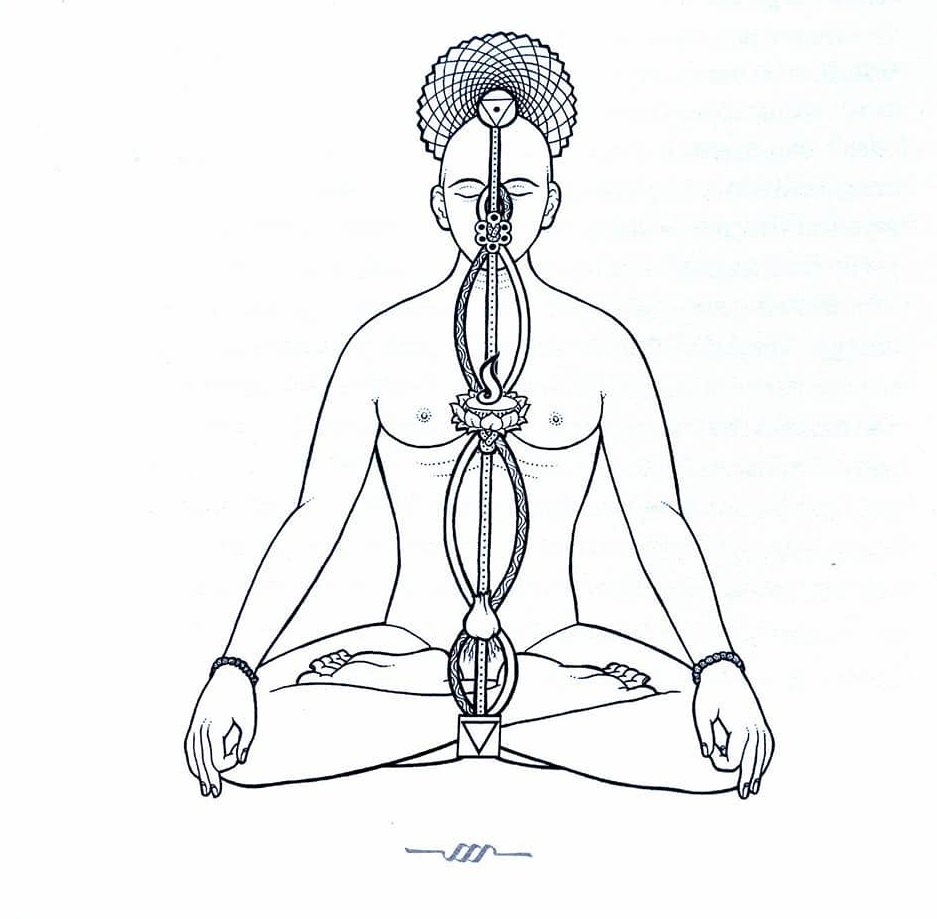
So, the granthis aren’t merely symbolic, but are often described as actual thresholds encountered in sādhana, especially during deep prāṇic awakening.
Māyā-granthi might be considered as one of the final frontiers.
General Symptoms of Blocked Kundalini Energy
Physical Sensations: People might feel a variety of physical sensations as energy moves through blockages, such as tingling, numbness, heat, or cold. Some might even experience pain or pressure as the energy tries to clear these blockages.
Emotional Upheaval: Blockages can cause intense emotional swings or cathartic releases. Deeply buried emotions may surface, causing feelings of fear, anger, sadness, or confusion.
Mental Confusion: People might experience mental fog, difficulty concentrating, or a sense of being overwhelmed as the mind attempts to process the energy moving through blocked channels.
Spiritual Discomfort: Since these knots are deeply tied to our spiritual and psychological identity, there can be moments of profound existential questioning, crisis, or spiritual disorientation.
How to Alleviate Discomfort During Kundalini Rising Through the Granthis
When Kundalini energy encounters the granthis—the subtle energetic knots within the central channel—it may stir up intense physical, emotional, or psychological discomfort. These knots correspond to deep-seated attachments and patterns of consciousness, and their unraveling can be both liberating and overwhelming. To support this process, a variety of complementary practices may help ease the symptoms and allow for smoother energetic integration:
Grounding Practices
Activities that reconnect you to the Earth are essential when Kundalini energy becomes intense, especially around the Brahma granthi at the root. Gentle yoga, walking barefoot in nature, gardening, or eating heavier foods. Sensual massage (abhyanga), and even shouting it all out (in a safe space) (See Guide 1 in the Kundalini Awakening Support Group)
Breathwork
Conscious breathing (pranayama) serves as both a regulator and a bridge—helping to clear stagnation and restore flow. Practices like Anahata pranayama, which center on the heart, can help dissolve emotional blocks and support the loosening of the Vishnu granthi. Always proceed with guidance from an experienced teacher, as improper technique may exacerbate symptoms rather than relieve them.
Mantras and Sound Therapy
Sound, especially in the form of sacred mantras, is one of the most powerful tools for working through the knots. Chanting with awareness sends vibration into the subtle body and can act as a “sound needle”—piercing and untangling the energetic blockages gently from within. Classical techniques that raise the mantra through the central channel (Sushumna nadi) help to awaken and harmonize the flow of Kundalini as it ascends.
Energy Healing
Energy-based modalities like Reiki, acupuncture, polarity therapy, or intuitive energy healing can provide external support when self-regulation is difficult. Skilled practitioners may help identify blockages or imbalances and assist in the gentle unraveling of stuck energy. Learning to work with your own energetic field can also be a deeply empowering step on the path.
Wisdom Practices
In times of intense awakening, the mind seeks stability and understanding. Immersing oneself in classical wisdom traditions—whether yogic, Vedantic, Taoist, Buddhist, Tantrik, or mystical strands of other cultures—offers a framework for interpreting the internal changes taking place. The granthis are not only energetic knots but reflections of inner limitations: fears, attachments, and identity structures. Through sincere study of authentic, integrative teachings, one gradually cultivates the discernment and insight (viveka) necessary to navigate the spiritual terrain. Knowledge rooted in integrity, compassion, and lived experience helps reorient the being—transforming confusion into clarity, and discomfort into revelation.
Kṣemarāja’s Recognition Sutras
In the Pratyabhijñāhṛdayam (“Recognition Sutras”), Kṣemarāja presents the practices of Sutra 18 as direct means of dissolving the contractions that bind consciousness into limited identity.
Through methods such as the quieting of conceptual thought (vikalpa-kṣaya), interruption of habitual energetic currents, and entry into the Madhya — the inner Center of awareness — the practitioner gradually loosens the psychoenergetic knots (granthis) that sustain attachment to body, mind, emotion, ego, and dualistic perception.
In this view, the granthis are not merely symbolic obstructions but living contractions within consciousness itself, and these practices are intended to pierce them experientially, allowing recognition (pratyabhijñā) of one’s identity with universal consciousness, Śiva.
The Practices According to Kṣemarāja:
- Dissolution of mental constructs: vikalpa-kṣaya
- Contracting energy: śakti-saṅkoca (two varieties): a. turning awareness within even as sense-energy is flowing out ( = “second attention”) and b. completely turning back the energy; pulling all the way into core
- Expanding energy: śakti-vikāsa (contacting the entire sense field while connected to center; = tattva-bhāvanā)
- Expanding and contracting energy: śakti-saṅkoca-vikāsa (two modalities): a. uccāra: stimulate the upper kuṇḍalinī through mantric vibration in the nasal cavity, thus piercing the māyā-granthi, allowing for energy flow out from and back to dvādaśānta; AND b. stimulate lower kuṇḍalinī to give rise to an immersion into ‘inner sensation’ in root, center, and tip, esp. center
- Pausing the flows: vāha-cheda (bringing prāṇa-apāna to stillness thru accessing icchā in the heart-center by means of the ‘vowelless k’)
- Settling the mind by paying attention to the breath’s point of emergence and its point of coming to rest (in heart and dvādaśānta): ādyanta-koṭi-nibhālana
- Bringing attention to the moment of unfolding, the initial arising of any energy state: unmeṣa-daśā-niṣevaṇa
- Relishing a beautiful experience (food, drink, music, etc.): ramanīya-viṣaya-carvaṇa
- Meditating on oneself when full of bliss: ānanda-pūrṇa-svātma-bhāvanā
(Transl. Wallis)
If you’re experiencing discomfort as energy moves through these areas, it’s important to proceed with patience and self-compassion, as clearing blockages often takes time. And reach out for guidance specific to your personal condition from a practitioner who may be able to gently support you on your way.

…is a natural mystic, Śaiva-Śākta Tantrika and Jñāna Yogī. David holds degrees in Eastern Philosophy and Semiotics, lives in Japan with his family, and works as an author and teacher of the wisdom traditions, devoting his time to developing science-based tools and programs that help people reach the fullest potential of the human condition. This site is the legacy of the Himalayan Ashram—Uma Maheshwara Yoga & Ayurveda (UmaMaYA).
Would you like to share this article?

Discover more from REAL YOGA
Subscribe to get the latest posts sent to your email.