
KUNDALINĪ: THE POWER THAT WORKS BECAUSE IT IS NOT WHAT YOU WANT
Raw, unfiltered, no fluff—Certainly NOT a diagnosis.
I keep saying this: Kundalinī was never meant to be pathologized, and there is a modern penchant for self-diagnosis that defies the reality of this topic. Kundalinī was never meant to be a trendy explanation for your anxiety, your insomnia, your unexplained sensations, or the latest episode of your spiritualized mental health crisis. Yet, here we are: an entire subculture of seekers who have turned an ancient, precise mechanism of liberation into the ultimate psychosomatic scapegoat.
When I speak of Kundalinī, I am not speaking of a glowing ascent into superhuman bliss, a shortcut to enlightenment, or a cosmic upgrade for your personality. I am speaking of a mechanism forged in the fires of Tantric alchemy, where the stakes were not self-improvement but the dissolution of the self entirely.
If that unsettles you, good. It should.
If your therapist suggests SSRIs but your Instagram guru suggests “Kundalinī Syndrome,” you are not experiencing awakening. You are experiencing the modern spiritual mind’s desperate need to medicalize mysticism—and mystify its own instability.
Kundalinī is not your diagnosis. It is not the reason you can’t sleep, the cause of your panic attacks, or the mystical label for your unresolved trauma. It is not a convenient narrative to explain why you feel “different” after that one breathwork session, that psychedelic trip, or that three-day silent retreat where you finally felt something.
Source texts like the Haṭha Yoga Pradīpikā do not describe a spiritual disorder. The Śiva Saṃhitā does not offer a checklist of symptoms to validate your existential dread. The Tantras do not care about your self-diagnosed “energy surges”—they care about whether you can sit still long enough to let the fire do its work without turning it into a story.
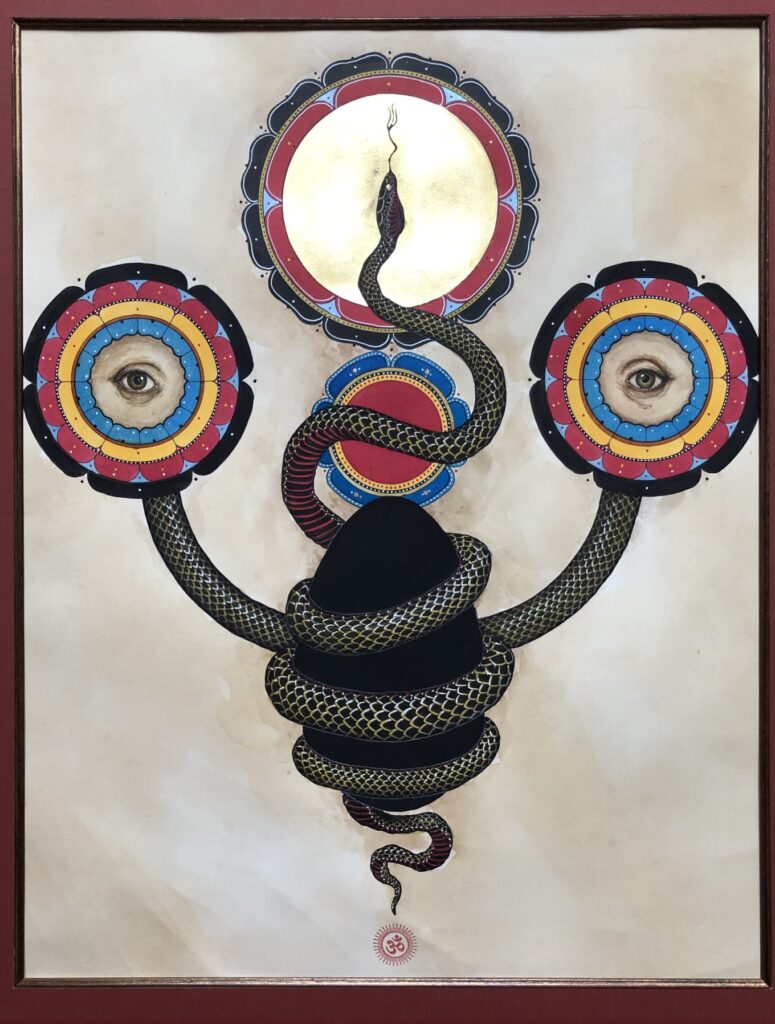
And yet, the modern spiritual landscape is flooded with Kundalinī as a catch-all explanation for anything intense, overwhelming, or inexplicable. Too much energy? Kundalinī. Weird body sensations? Kundalinī. Emotional breakdown after a plant medicine ceremony? Kundalinī. Can’t function in daily life but feel “called to a higher purpose”? Must be Kundalinī.
No.
This is not awakening. This is spiritual hypochondria—the compulsive need to frame every inner disturbance as sacred, every instability as divine, every breakdown as breakthrough. And the gurus, coaches, and “energy healers” who encourage this? They are not guides. They are enablers, turning an ancient path of dissolution into a modern pathology—one that keeps you dependent on their explanations, their sessions, their frameworks, instead of doing the real work of purification, discipline, and silent, unglamorous surrender.
Historically, those who engaged with this force we call Kundalinī were not called “yogis” in the way we romanticize the term today. They were called sādhakas—practitioners, not of empowerment, but of systematic unraveling.
The word Kundalinī itself comes from kuṇḍala—the coil, the bind, the noose of latent power—not because it is something to be “activated” like a switch, but because it is the very knot of embodied ignorance that must be undone. And here is the part no one wants to hear: Most who claim to work with Kundalinī are not special. They are reckless.

The methods now bundled under “Kundalinī Yoga” or “spiritual awakening” did not descend as a polished system for modern seekers. They emerged because the ancient sages of the Nātha, Kaula, and Trika traditions understood one thing: Liberation is not an experience. It is the end of the experiencer. The Haṭha Yoga Pradīpikā, the Śiva Saṃhitā, the Vijñāna Bhairava Tantra—these texts do not describe a path of light and ecstasy. They describe a surgery. A controlled dismantling of the psycho-physical structures that bind awareness to the illusion of a separate self.
If you actually read the source material—not the Instagram quotes, not the neotantric workshops, but the original Sanskrit—what you find is not mysticism. You find protocol. You find warnings. You find a clinical breakdown of the nervous system, the breath, the movements of prāṇa, and the cold admission that most who meddle with this force are not prepared for what it demands.
Some might call it ‘a hero’s journey’. But there is really nothing heroic about it.
And the texts are clear: Kundalinī is not a disorder. It is not something that happens to you like a virus. It is something that unfolds through you—if you have prepared the ground. If you have purified the nāḍīs. If you have stabilized the prāṇa. If you have burned through the granthis (knots) of ego, desire, and fear. If you have stopped collecting experiences and started dissolving the collector.
But that takes time. It takes effort. It takes a kind of humility that modern spirituality has largely abandoned. It is easier to label yourself “awakening” than to admit you are unstable. Easier to call it Kundalinī than to do the unsexy work of grounding in reality, of actual purification, of real surrender to presence—not the performative kind you post about, but the kind that happens in silence, without an audience.
So no—your racing heart is not necessarily Kundalinī. Your insomnia is not necessarily Kundalinī. Your emotional volatility is not necessarily Kundalinī. Your inability to function in the world is not a sign of spiritual advancement—it is a sign that you could use a little help, not a mystical explanation.
Kundalinī is not your excuse. It is not your identity. It is not your spiritualized mental health crisis. It is a force—one that demands preparation, demands discipline, demands that you stop diagnosing yourself with awakening and start doing the work that makes awakening possible.
And if this pisses you off? Good. You should be pissed. Not at me—at the culture that has convinced you that instability is enlightenment, that trauma is transformation, that breaking down is breaking through.
Kundalinī is not here to validate your chaos. It is here to incinerate it. But first, you have to stop worshipping the fire—and start tending the hearth.
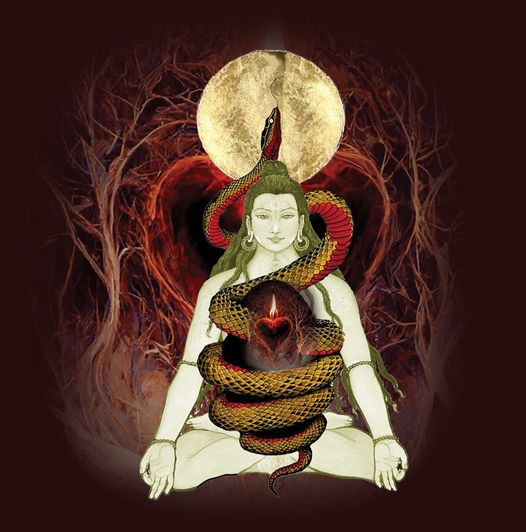
Kundalinī’s domain is precision. Where can awareness go that the ego cannot follow? What habitual identity must be starved for the coiled power to rise? When will the mind finally stop clutching at visions, at siddhis, at the intoxicating rush of “progress”? That is why purification (śodhana) matters more than ecstasy. A practitioner who has mastered prāṇāyāma without attachment is more dangerous to their own ignorance than one who chases a thousand lights in meditation. A sādhaka who understands the traps of the subtle body is rarer than one who boasts of “awakened Kundalinī” after a weekend retreat.
And no—before someone reaches for the word—there is no official, standardized “Kundalinī awakening” that looks like a Hollywood special effect. That is modern projection. What the texts actually describe is colder, and far more exacting. The Haṭha Pradīpikā does not speak of blissful surges of energy, or snakes rushing up the spine. It speaks of obstructions. Of blockages in the nāḍīs that must be burned through. Of the three granthis (knots)—Brahmā, Viṣṇu, Rudra—that must be pierced not with force, but with relentless, disciplined dissolution. If that disappoints you, that is not the fault of the tradition.
Kundalinī is ruthless precisely because it refuses symbolism. Even the famous “symptoms”—visions, heat, involuntary movements—are not signs of progress. They are side effects, often distractions. The Śiva Saṃhitā is explicit: Those who chase siddhis fall from Yoga. The Gheraṇḍa Saṃhitā warns that premature stimulation of Kundalinī without purification leads to madness. Everything must justify its risk. Every sensation must be examined, not celebrated.
What fascinates me most—and what the New Age consistently erases—is how anti-romantic the mindset truly is. The Vijñāna Bhairava Tantra spends more time on the dissolution of thought constructs than it does on “spiritual experiences.” It warns against attachment to phenomena. It explicitly states that a practitioner who craves the dramatic displays of Kundalinī has already lost the path. This is not a philosophy of empowerment. It is a mechanism of eradication.
And then there is the uncomfortable truth: Kundalinī was never meant to be popular. Even in the golden ages of Tantra, this knowledge was guarded, not because it was dangerous in the sensational sense, but because it dismantles everything the ego holds dear. The moment large-scale spiritual consumerism arose, the depth of the practice became something to water down, not transmit. That is why the texts were written—not as mass teachings, but as encoded instructions for the few who could endure the process.
Which brings me to the modern obsession. Every time someone tries to turn Kundalinī into a timeless self-help tool, something clean and marketable and “empowering,” they are doing the exact opposite of what it was designed for. They are making it visible. They are making it consumable. They are making it safe. And Kundalinī is none of those things.
It exists because ordinary spirituality fails. Because devotion without discipline is delusion. Because the mind is predictable in its attachments. Because people believe what they want to believe about awakening—and Kundalinī exploits that. Not with magic. With fire.
So no—I am not interested in fantasy Kundalinī. I am interested in the historical, functional reality where progress means becoming less, not more—where success means the ego has no story left to tell—and where the highest achievement is not to be remembered as “awakened,” but to disappear entirely into the silence beyond the coil.
That is why real Kundalinī does not need gurus, brands, or certifications. It does not need dramatic narratives of ascent. And it certainly does not need modern titles retrofitted onto a tradition that never sought them.
The power is already sharp enough—if you stop dulling it with wishful thinking.
Feel free to reach out if sometime if you’re feeling the call to get real.
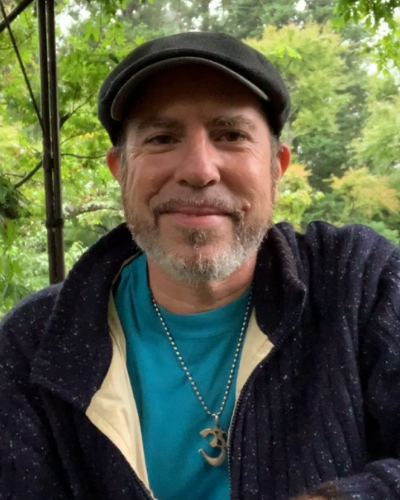
…is a natural mystic, Śaiva-Śākta Tantrika and Jñāna Yogī. David holds degrees in Eastern Philosophy and Semiotics, lives in Japan with his family, and works as an author and teacher of the wisdom traditions, devoting his time to developing science-based tools and programs that help people reach the fullest potential of the human condition. This site is the legacy of the Himalayan Ashram—Uma Maheshwara Yoga & Ayurveda (UmaMaYA).
Would you like to share this article?

Discover more from REAL YOGA
Subscribe to get the latest posts sent to your email.