
Kriyās can arise for a number of reasons, and while they are often associated with Kundalini processes in yogic traditions, their presence alone doesn’t automatically mean “Kundalini is rising” in the classical sense.
The Sanskrit itself can be a little tricky here because kriyā simply means “action,” “movement,” or “activity.” In spiritual contexts, spontaneous kriyās usually refer to involuntary movements, breath changes, vocalizations, mudrās, shaking, postural changes, energetic surges, and so on that seem to arise on their own during meditation, prayer, breathwork, trauma release, devotional states, or altered states of consciousness.
These phenomena may accompany Kundalini awakening, but they can also arise through: nervous system discharge or regulation, intense concentration, breath practices, emotional release, suggestibility, devotional absorption, trauma activation, qi/prāṇa movement more generally, or various psychophysical processes that are not necessarily full Kundalini awakening. Traditionally, however, Kundalini was not defined merely by movements or energetic symptoms, but by a deeper transformation of consciousness and the gradual reorganization of the being.
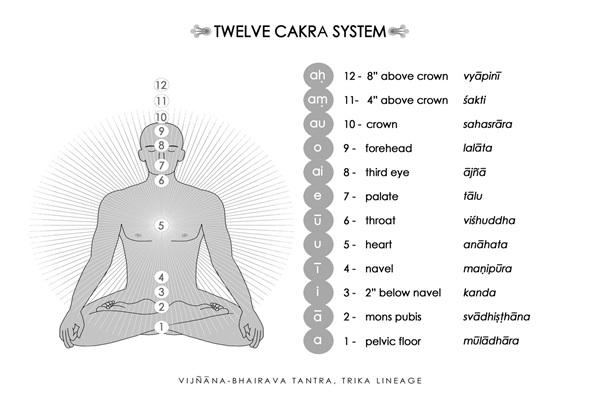
One way some traditions distinguish this is by looking beyond mere prāṇa śakti (energy movement) alone. If Kundalini is genuinely awakening in a fuller sense, there is often also the emergence of:
- jñāna śakti — an unfolding of insight, clarity, discrimination, understanding, or direct knowing;
- icchā śakti — a transformation of will, orientation, devotion, sincerity, or the deep movement toward Truth/God/liberation.
In other words, not only movement of energy, but also transformation of consciousness and intention.
Some people have dramatic kriyās with little enduring transformation; others undergo profound awakening with almost none. So kriyās may indicate that something is moving in the system, but they are not, by themselves, definitive proof of Kundalini rising.
Like Kundalini, Kriyā is a subtle and profound term with multiple layers of meaning depending on the tradition, context, and even the level of a practitioner’s experience.
Sanskrit Definitions of Kriyā
The Sanskrit root √kṛ means to do, to act, to make, to perform. From this root, kriyā takes on several shades of meaning:
1. Action or Practice (General Meaning)
Kriyā is often used synonymously with karma, referring to any action, movement, or effort.
“Kriyāḥ karmaṇi kriyāyām ca.”
— Monier-Williams Sanskrit Dictionary
This Sanskrit phrasecan be translated as:“Kriyās (movements or actions) pertain to both physical action (karmaṇi) and spiritual practice (kriyāyām).”
Word-by-word breakdown:
- Kriyāḥ – plural of kriyā, meaning acts, movements, or processes.
- Karmaṇi – locative singular of karma, meaning action, deed, or activity; here, it implies in physical actions.
- Kriyāyām – locative singular of kriyā, meaning spiritual action, yogic technique, or ritual.
- Ca (च) – and.
So the phrase draws a subtle distinction:
- Kriyāḥ can be found both in karma (ordinary or worldly action) and in kriyā (yogic/spiritual process).
It reflects the tantric and yogic insight that all movements—whether mundane or mystical—can serve the sacred.
In the Yogic Context then:
A kriyā becomes an intentional spiritual practice or technique that purifies the subtle body and prepares it for awakening.
“Tapas svādhyāya īśvarapraṇidhānāni kriyā-yogaḥ.”
— Yoga Sūtra 2.1
(“Austerity, self-study, and surrender to the Divine—these are Kriyā Yoga.”)
2. Spontaneous Movement
In Tantra, Kundalini Yoga, and Hatha Yoga, kriyās also refer to spontaneous, involuntary movements or energetic processes that arise during spiritual awakening.
These include:
- Shaking
- Trembling
- Mudrās (hand gestures)
- Āsanas (spontaneous postures)
- Prāṇic currents
- Inner or outer vocalizations
- Breath shifts
- Visions or internal pulsations
These are not willed but arise from the intelligence of prāṇa and Shakti moving through the nāḍīs (subtle channels), clearing blockages.
“As Kundalini rises, kriyās manifest as the subtle knots (granthis) are pierced.”
— Hatha Yoga Pradipika, 3.109–112
3. Energetic and Psychological Purification (Process and Response)
Kriyā is also the process of unwinding *karma or burning vasanas (latent tendencies, the source of reactivity) through the body-mind. It’s a release of what no longer serves—often experienced through intense sensations, emotions, or even altered states of consciousness.
“When Kriyās arise, it is the body releasing memory stored in the tissue, the mind releasing samskāras, and prāṇa reorganizing itself into higher harmony.”
— Aghor Nāth oral tradition
*karma, in this case, now assuming the meaning and context of causal response.
4. Kriyā as a Specific System of Practice (Kriyā Yoga)
In Kriyā Yoga (as popularized by Lahiri Mahasaya and Paramahansa Yogananda), it refers to a precise set of pranayama and meditation techniques designed to accelerate spiritual evolution.
In this case, Kriyā is not spontaneous, but methodical and transmitted through initiation.
“Kriyā Yoga is the lightning path that burns karma before it bears fruit.”
— Autobiography of a Yogi, Paramahansa Yogananda
Why Might Kriyās Happen Every Few Seconds?
When Kundalini is awakened—especially if it’s sudden, premature, or unsupported—the body-mind may undergo rapid cycles of purification and reorganization. This can result in:
- Hyper-sensitized prāṇa
The energy body becomes extremely responsive to internal or external stimuli (breath, thoughts, emotions, sounds, even silence). - Granthi-piercing
As described in Tantrik and Hatha scriptures, Shakti must pierce the knots of consciousness. Each “piercing” can cause a wave of reactions or kriyās. - Energetic Blockage + Flow = Microbursts
When energy meets resistance in a nāḍī or chakra, it may pulse, trying to clear. This pulsing can repeat every few seconds until the circuit completes. - Unintegrated awakening
If awakening happens without enough grounding, rest, or containment, the system may try to “process too much too fast,” resulting in constant micro-kriyās. - Overidentification or over-monitoring
A practitioner hyper-focused on inner movement may amplify kriyās. They are real, but attention can magnify them. (This one is huge!)
What Can Be Done?
If kriyās are frequent and overwhelming:
- Grounding is essential (See Grounding Guide in Group Guide One at my Kundalini Awakening Support Group)
- Surrender with discernment: trust the intelligence of Shakti, but also honor the body’s limits
- Safe containment: think of it not as repression, but as stilling the waters so reflection appears
- Gentle asana or restorative yoga may help integrate energy
- Speak it aloud or write: give form to formless process
- Reach out for assistance from a trusted guide or teacher of these sacred lineages
“Shakti moves with love, not force. When honored, She brings wisdom—not just motion.”
— Aghori Baba Amritananda

…is a natural mystic, Śaiva-Śākta Tantrika and Jñāna Yogī. David holds degrees in Eastern Philosophy and Semiotics, lives in Japan with his family, and works as an author and teacher of the wisdom traditions, devoting his time to developing science-based tools and programs that help people reach the fullest potential of the human condition. This site is the legacy of the Himalayan Ashram—Uma Maheshwara Yoga & Ayurveda (UmaMaYA).
Would you like to share this article?

Discover more from REAL YOGA
Subscribe to get the latest posts sent to your email.