One of the more curious features of the modern spiritual landscape is that people often begin working with energy long before they have a framework for understanding it.
A Kundalini awakening occurs. A Reiki attunement opens new sensitivities. Meditation reveals unfamiliar dimensions of experience. Someone discovers ritual practice, astral exploration, psychic phenomena, or a healing modality. Experiences begin accumulating, often rapidly, while understanding struggles to keep pace.
This isn’t necessarily a problem. Experience is what often motivates deeper study. Yet for many practitioners there comes a point when experience begins to outpace understanding. We possess genuine experiences, perhaps even considerable skill within a particular system, but all-too-often lack a coherent framework for understanding how the various dimensions of energetic and spiritual life fit together.
The Reiki practitioner understands Reiki. The Kundalini practitioner understands Kundalini. The ceremonial magician understands ritual. The Tantrika understands Tantra.
Yet anyone who has spent sufficient time in spiritual communities has encountered a curious phenomenon. A person may possess years of experience within a particular system and still find themselves unsettled when an experience arises that doesn’t fit comfortably within the framework they have inherited. Questions emerge. Is this psychological, energetic, symbolic, spiritual, archetypal, or some combination of all of them? What exactly is happening here? How does this relate to everything else I have learned?
In many cases, the difficulty isn’t that the tradition itself lacks answers. The difficulty is that most practitioners encounter techniques long before they encounter understanding.
The wisdom traditions aren’t merely collections of practices. They are maps of reality. When understood deeply enough, each possesses the capacity to illuminate the whole.
The challenge, however, is arriving at that depth of understanding.
Most practitioners inherit fragments. Techniques. Terminology. Isolated experiences. Rarely are they given a coherent framework that allows them to understand not only what they are doing, but why it works.
It is precisely that kind of understanding that I have come to think of as energetic literacy.
The longer I’ve worked across traditions, the less interested I’ve become in collecting systems and the more interested I’ve become in understanding the principles that underlie them. Again and again, I’ve found myself returning to the same conclusion: beneath the differences in language, symbolism, and methodology, the world’s time-honored mystical traditions are generally describing the same territory.
Different maps. One territory.
This realization sits at the heart of a project I’ve been developing for quite some time and which is finally ready to share.
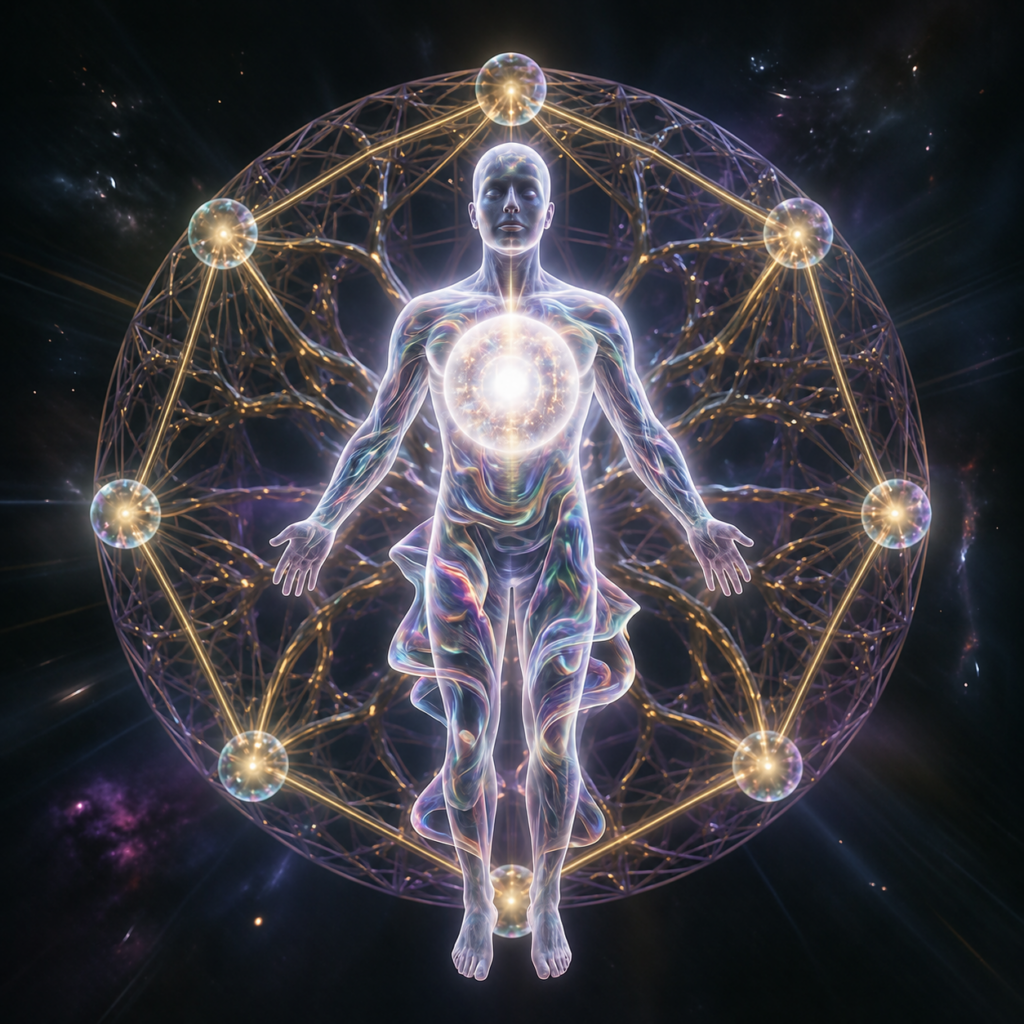
Beginning this month, I will be offering a year-long satsanga curriculum entitled The Energy Body: Foundations of Energetic Literacy. The series consists of six satsangas spread throughout the year, each building upon the last and each examining the energy body from a different perspective.
We begin with Foundations, establishing the framework that supports everything which follows. We then move through Reiki and the healing current, Akasha and the subtle maps of consciousness, Kundalini and the mechanics of awakening, the symbolic technologies of the Western Mystery Tradition, and finally Classical Tantra, where many of the themes explored throughout the year are brought together into a single coherent vision.
The intention isn’t merely to teach techniques. Nor is it to persuade students that one tradition is superior to another. Rather, it is to cultivate energetic literacy: the ability to understand, interpret, navigate, and engage subtle reality with increasing clarity, discernment, and confidence.
The deepest function of spiritual practice isn’t the pursuit of extraordinary experiences, but the removal of obstacles to a life well lived. Greater freedom. Greater clarity. Greater authenticity. A deeper capacity for joy. A more conscious participation in the unfolding of one’s own life.
In that sense, energetic literacy isn’t an end in itself. It is a means of becoming increasingly capable of living in alignment with one’s deepest values, highest aspirations, and truest nature.
For that reason, the curriculum is intentionally sequential. Foundations serves as the entrance point for everyone, and each subsequent satsanga builds directly upon the material presented previously. The structure is not arbitrary. In my experience, many of the difficulties encountered in energetic and spiritual work arise when practitioners attempt advanced methods without first developing the conceptual and practical foundations necessary to understand what is occurring.
Strong foundations create safe and sustainable growth.
By the completion of the curriculum, students will have encountered many of the core principles that run through the world’s great wisdom traditions and developed a practical framework for understanding how these traditions intersect, where they differ, and what they reveal about the nature of consciousness, energy, and human transformation.
The purpose is competency. The cultivation of clear thinking, discernment, and the capacity to engage the energetic dimensions of life with increasing confidence and skill.
The first satsanga, The Energy Body: Foundations of Energetic Literacy, will be held live via Zoom on June 28 and will run approximately two to three hours, including time for questions and discussion. Registered participants will receive the recording afterward, together with supporting notes and study materials.
Tuition for Foundations is $45 USD. For those who already know they wish to undertake the complete journey, enrollment in the full six-part curriculum is available for $200 USD. Students who begin with Foundations and later decide to continue may apply the full cost of the first satsanga toward the complete series.
As always, these teachings are intended for individuals who are reasonably stable physically, emotionally, and psychologically. They are offered as spiritual and educational instruction and are not a substitute for medical or psychological care.
If this work resonates with you, I would be delighted to have you join us.
Register HERE.
…is a natural mystic, Śaiva-Śākta Tantrika and Jñāna Yogī. David holds degrees in Eastern Philosophy and Semiotics, lives in Japan with his family, and works as an author and teacher of the wisdom traditions, devoting his time to developing science-based tools and programs that help people reach the fullest potential of the human condition. This site is the legacy of the Himalayan Ashram—Uma Maheshwara Yoga & Ayurveda (UmaMaYA).
Would you like to share this article?

Discover more from REAL YOGA
Subscribe to get the latest posts sent to your email.