The phrase dark night of the soul has slipped its moorings.
Dark Night of the Soul—Once a technical term in the grammar of awakening, it now circulates freely through therapeutic language, social media confessions, and late-night searches for relief. Any prolonged suffering—emotional exhaustion, nervous collapse, spiritual boredom, existential despair—may be baptized with the name, as though naming itself were salvation.
Yet the original Dark Night was not a mood, nor a pathology, nor a punishment. It was a revelation written in fire.
St. John of the Cross, the sixteenth-century Carmelite mystic, didn’t coin the phrase as metaphor. He recorded it as lived anatomy. His Dark Night of the Soul unfolded first as an eight-stanza poem composed in the silence of imprisonment, and later as a long, meticulous commentary explaining what transpires when the Divine undertakes to free the soul from everything it mistakes for itself.
The poem was brief. The ordeal was not.
John was locked in a lightless cell by members of his own order, beaten, starved, publicly humiliated, and deprived of human consolation for nine months. But what broke him open wasn’t despair; it was clarity. His senses were stripped. His intellect was confounded. Even the sweetness of prayer vanished. What remained in the silence was naked faith.
This is the first correction modern language demands: the dark night is not primarily suffering inflicted by circumstances. It is the suffering induced by freedom too close for the ego to survive intact.
St. John didn’t write to dramatize his pain, but to throw down some breadcrumbs for many who would follow him down this path and hopefully show them the error before it was made. Again and again, he insists that souls abandon the path prematurely precisely because God’s work feels like loss.
But the dark night isn’t evidence of abandonment. It is evidence of intimacy.
In this, the Dark Night stands in quiet communion with the great wisdom traditions of the world.
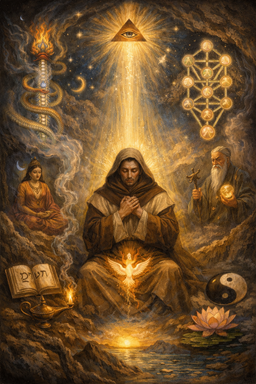
Classical Tantra speaks of liberation by saturation, not of transcendence by escape. Kundalini awakening, when authentic and unguided, often arrives as disorientation, somatic upheaval, and the collapse of familiar identity. The nervous system is flooded. Old structures cannot hold the current, and what remains must learn to yield.
Kabbalah names this contraction tzimtzum: the necessary withdrawal of forms so that divine light may be received without shattering the vessel. Still, the breaking of the vessels is necessary—it’s part of the architecture. Restoration, tikkun, follows only after what is false can no longer be sustained.
Daoist internal alchemy, too, cautions against clinging to experiences. The descent into emptiness, the return to the uncarved block, is the pivot upon which true vitality turns. Where resistance hardens, stagnation occurs. Where yielding is allowed, the Dao moves unimpeded.
Across these traditions, one pattern repeats: awakening dismantles before it reveals. Grace unhouses before it enthrones.
The confusion arises when this universal process is interpreted through a modern lens that pathologizes disintegration while romanticizing transformation. Prolonged suffering isn’t automatically a dark night. Nervous system dysregulation is not synonymous with spiritual purification. Trauma is not initiation by default.
St. John was precise on this point. He distinguished between the night of the senses and the night of the spirit—between psychological deprivation and divine unknowing. The latter is marked by a deepening orientation toward truth, humility, and love, even when all feeling collapses, not by chaos for its own sake.
The distinguishing feature of the Dark Night isn’t pain, but direction! This is where practice becomes essential.
The global wisdom traditions do not leave the soul unguided in dissolution. Tantra offers disciplined engagement with breath, mantra, and embodiment on the meditative field, so that energy may refine rather than ravage. Kabbalah provides symbolic maps that prevent the seeker from mistaking collapse for annihilation. Daoist cultivation teaches how to circulate force rather than resist it, revealing the play of nature in every apparent form. Even St. John insisted that the night must be accompanied by discernment, community, and surrender, lest one confuse darkness with destitution.
The purpose of the night is not endurance. It is remembrance! Remembrance of what remains when every borrowed identity falls away. Remembrance of the ground that was never harmed. An essential recognition of freedom not attained, but innate!
At the end of the Dark Night stands what John called true faith. Mountain-moving faith. Not belief, but faith as naked participation in reality itself. A knowing without object. That knowing deep within the cave of your heart, before the mind reaches out to grasp onto all those shiny things and call itself right. A love so simple. A union that doesn’t have to announce itself.
In a time where suffering is ubiquitous and meaning scarce, the temptation is to sanctify pain rather than refine perception. But the mystics caution us gently: not every night is dark by design, and not every darkness is salvific.
The invitation is subtler and far more exacting!
To learn the difference.
To submit to unknowing without sacrificing the body, the psyche, or the heart.
To allow what is not essential to burn without mistaking the fire for the truth.
And finally, to step out of the night—not as a survivor, but as one who remembers they were never separate from the light that led them there in the first place.
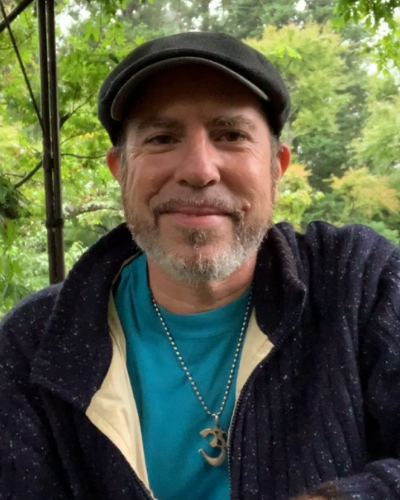
…is a natural mystic, Śaiva-Śākta Tantrika and Jñāna Yogī. David holds degrees in Eastern Philosophy and Semiotics, lives in Japan with his family, and works as an author and teacher of the wisdom traditions, devoting his time to developing science-based tools and programs that help people reach the fullest potential of the human condition. This site is the legacy of the Himalayan Ashram—Uma Maheshwara Yoga & Ayurveda (UmaMaYA).
Would you like to share this article?

Discover more from REAL YOGA
Subscribe to get the latest posts sent to your email.