
Are spicy foods (stimulants) bad for me in terms of how they will affect my awakening process?
This is a deep and elegant question bridging Āyurveda, Sāṅkhya Philosophy, and Classical Tantra, and touches into the subtle psychophysiology of Kundalinī awakening.
Let’s explore this in layers:
First, a foundational understanding of doshas and guṇas, then their relationship to spiritual transformation, and finally the traditional guidance on diet and control.
Doṣhas and Guṇas
The Doṣhas: The Biological Energies of Nature
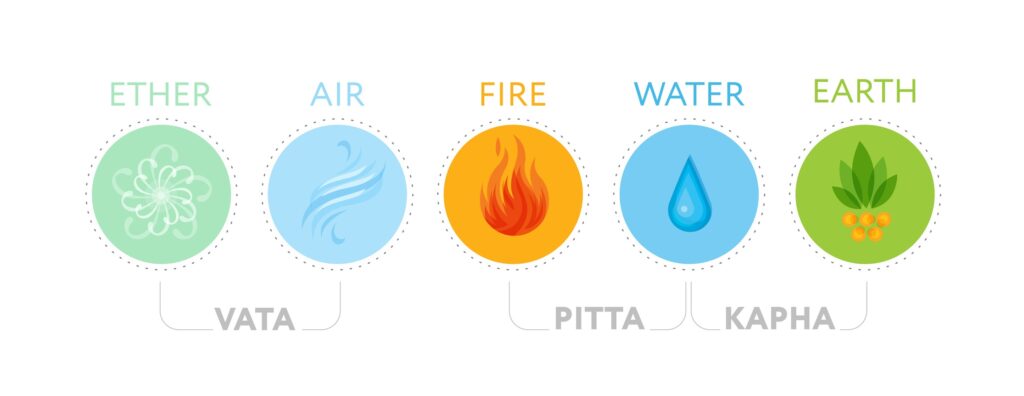
In Āyurveda, the three doṣhas — vāta, pitta, and kapha, are dynamic principles that govern all bodily and mental processes. They are not substances, but forces (tattvas) that manifest the five great elements (pañca-mahābhūtas) in living form.
A Dosha’s Constituent Elements:
| Doṣa | Constituent Elements | Qualities (Guṇas) | Psychophysical Expression |
|---|---|---|---|
| Vāta | Air + Ether | light, dry, mobile, subtle, cold | governs movement, nervous system, breath, creativity, inspiration |
| Pitta | Fire + Water | hot, sharp, oily, light | governs digestion, metabolism, discernment, vision, intensity |
| Kapha | Earth + Water | heavy, cool, stable, oily, dense | governs structure, cohesion, memory, endurance, calmness |
Each person is born with a unique constitutional balance (prakṛti). Over time, this balance can shift (vikṛti) due to diet, lifestyle, stress, and spiritual practice.
When Kundalinī begins to stir, the subtle bodies, or energy body (sūkṣma śarīra) becomes highly reactive to these forces. Imbalance in vāta (especially) can cause instability in mind and nerves; excessive pitta may inflame ego or generate anger; kapha may dull awareness or stagnate energy flow. Therefore, āyurvedic insight into one’s doṣhic nature helps stabilize the body-mind vessel for awakening.
The Guṇas: The Psychological and Spiritual Qualities of Nature
Whereas the dohṣas govern physiological patterns, the three guṇas — sattva, rajas, and tamas, govern the psychological and spiritual atmosphere of consciousness itself. They are the primary strands (triguṇa) of Prakṛti (Nature) as described in Indian philosophical scripture like the Sāṅkhya Kārikā and Bhagavad Gītā.
| Guṇa | Nature | Tendencies | Spiritual Expression |
|---|---|---|---|
| Sattva | light, harmonious, clear | balance, joy, purity, truth | promotes wisdom, devotion, and awakening |
| Rajas | active, passionate, agitating | desire, restlessness, drive | promotes movement and ambition, but also ego |
| Tamas | heavy, inert, dark | ignorance, lethargy, confusion | obscures awareness and attachment |
prakṛteḥ sukumāratvāt triguṇātmikā cetanāvatī |
sattvarajastamāṁsi guṇāḥ prakṛteḥ svarūpam ||
Because of its subtlety,
Nature (Prakṛti) is of threefold essence
— sattva, rajas, and tamas —
each ever-interwoven,
forming the nature of all manifestation
Sāṅkhya Kārikā 12
The interplay of guṇas determines the quality of consciousness, just as the interplay of doṣhas determines the quality of embodiment. In spiritual practice, one seeks to cultivate sattva as the transparent medium through which Kundalinī ascends — but without rejecting rajas and tamas, for they too serve as grounding and motivating forces when harmonized.

Triguna iconography, a composite depicting Śiva’s trishul, and the ascetic yogi’s tripuṇḍra
The Meeting Point: Doṣas, Guṇas, and the Kundalinī Path
According to the tradition, Kundalinī awakening is not just a physiological surge of energy, but rather a refinement of the guṇas and doṣas through conscious alignment with Śakti—the all-pervading life force.
- Balancing Vāta ensures that the nervous system can bear the increased prāṇic voltage. Excess vāta may cause tremors, fear, sleeplessness, or erratic thought — the so-called “Kundalinī syndrome.”
- Soothing Pitta cools the fire of ego and intensity that can manifest as zealotry, pride, hallucination, and visionary burnout.
- Lightening Kapha removes lethargy and resistance, allowing motivation, aspiration and devotion to rise.
Meanwhile, on the psychic plane:
- Transforming Tamas into Sattva clears the fog of ignorance.
- Transmuting Rajas into Sattva refines passion into devotion and effort into grace.
- Stabilizing Sattva allows Śakti to flow unobstructed toward union with Śiva at the crown.
mitāhārāśca yuktaśca śīlagrāhī ca yogavit |
apramādī bhavet sūkṣmaḥ satataṃ yogatatparaḥ ||
“He who eats moderately, is disciplined,
discriminating, and ever vigilant, subtle
and devoted to yoga, attains perfection.”²
Haṭha Yoga Pradīpikā 2.2
In essence, Āyurveda provides the embodied preparation for Kundalinī Sadhana (Classical practices). It teaches that awakening without purification of diet, emotion, and sensory input can destabilize the doṣhic matrix and distort the flow of subtle energy.

Scriptural Foundations and References
Several classical sources address these dynamics explicitly or implicitly:
Bhagavad Gītā, Chapters 14 and 17, discuss the three guṇas in depth, and how sāttvic food, worship, and conduct lead to clarity, while rājasic and tāmasic patterns obscure it.
āyuḥ-sattva-balārogya-sukha-prīti-vivardhanāḥ |
rasyāḥ snigdhāḥ sthirā hṛdyā āhārāḥ sāttvika-priyāḥ || (17.8)
“Foods that increase life, purity, strength,
health, joy, and cheerfulness
that are savory, substantial, and pleasing,
are dear to the sāttvic.”³
Bhagavad Gītā
doṣāḥ samyāḥ samāyāti prakṛtibhyo vikārataḥ |
teṣāṃ samyagavasthā tu śarīre yā sthitā matā ||
“Health is that state in which the doṣhas
remain in their natural equilibrium;
disturbance of this balance gives rise to disease.”⁴
Charaka Saṃhitā
(Sūtrasthāna 1.57)
Charaka further emphasizes sattvavajaya cikitsā — the therapy of strengthening sattva — as the highest medicine for the mind.⁵
yādṛśī bhavati āhāraḥ tādṛśī bhavati matiḥ |
yādṛśī bhavati matiḥ tādṛśaḥ prāṇa ucyate ||
“As is one’s food, so becomes the mind;
as is the mind, so becomes the prāṇa.”⁶
Śiva Saṃhitā 5.83–86
Yoga Sūtras of Patañjali (2.30–2.32) imply this same purification through yamas and niyamas, especially śauca (purity) and tapas (discipline), which regulate the doṣhas and guṇas toward equilibrium.
Practical Integration for the Seeker of Kundalinī
Self-Observation
Study your prakṛti (personal constitution) and vikṛti (shifts in your constitution) through psychophysical response patterns to diet and lifestyle. Notice how certain practices (fasting, prāṇāyāma, mantra) shift your doṣhas and guṇas.
Dietary Harmony
- Favor sāttvic foods: fresh fruits, ghee, whole grains, milk (if tolerated), lightly spiced vegetables.
- Avoid rājasic stimulants (chili, caffeine, onion, garlic) and tāmasic leftovers, alcohol, or processed food.
- Tailor specifics to your doṣha: grounding for vāta, cooling for pitta, stimulating for kapha.
As with all things, nothing is one-hundred percent, and everything is acceptable in moderation.
Lifestyle and Practice
- Vāta types benefit from warm oil massage, routine, and slow, grounding breathwork.
- Pitta types benefit from cooling prāṇāyāma (śītalī), compassion meditations, and lunar sādhanā.
- Kapha types benefit from invigorating yoga, fasting, and dynamic breathwork like kapālabhātī.
Cultivating Sattva
Engage in truthful speech, selfless service, devotional chanting, study of scriptures (svādhyāya), and association with sāttvic environments and teachers
The doṣhas teach us how energy moves in the body. The guṇas teach us how consciousness moves in the mind. When both are harmonized, the suṣumnā nāḍī (central channel) becomes a clear channel for Kundalinī Śakti to ascend. Thus, Āyurveda and Yoga are not parallel sciences but two wings of the same bird — the one tending the embodied vessel, the other awakening its divine current.
Footnotes
- Sāṅkhya Kārikā 12 — see also Bhagavad Gītā 14.5 for an almost identical exposition of the triguṇas.
- Haṭha Yoga Pradīpikā 2.2, on mitāhāra (measured food) as essential to spiritual accomplishment.
- Bhagavad Gītā 17.8 — Śrī Kṛṣṇa’s discourse on the threefold division of food according to the guṇas.
- Charaka Saṃhitā, Sūtrasthāna 1.57.
- Charaka Saṃhitā, Śārīrasthāna 1.102 — “The mind is cured by conquest of sattva (purity), not by drugs.”
- Śiva Saṃhitā 5.83–86 — translation adapted from Dvivedi’s Śiva Saṃhitā with Commentary, 1893.
For a deeper dive into the ayurvedic constitution the Yoga Sutras, the Gita, or Kundalini Sadhana, please explore the UmaMaYA program library, or reach out for a consultation with me anytime.

…is a natural mystic, Śaiva-Śākta Tantrika and Jñāna Yogī. David holds degrees in Eastern Philosophy and Semiotics, lives in Japan with his family, and works as an author and teacher of the wisdom traditions, devoting his time to developing science-based tools and programs that help people reach the fullest potential of the human condition. This site is the legacy of the Himalayan Ashram—Uma Maheshwara Yoga & Ayurveda (UmaMaYA).
Would you like to share this article?

Discover more from REAL YOGA
Subscribe to get the latest posts sent to your email.