
In the Tibetan Vajrayāna Tantra tradition, Karmamudrā literally means “Action Seal” (karma = action, activity; mudrā = seal). It is a very specific advanced yogic practice that uses the energies of sexual union as a method of realizing the nature of mind.
Mudra
In the tradition, a mudrā is most often a hand gesture, but the term extends more broadly to body positions, seals, energetic locks, or symbolic gestures involving the whole body, eyes, and subtle channels.
The Sanskrit mudrā comes from the root mud (to delight, to be pleased, to rejoice) and the suffix -rā, which implies a means or instrument. Therefore, the literal translation is often given as “seal” or “gesture”. A mudra is something that seals in energy or intention, or that delights by uniting body, mind, and spirit.
Karmamudra
Karmamudrā is the practice of uniting with a physical partner within a context of viewing that partner as the embodiment of wisdom (prajñā) and a skillful means (upāya) of attaining ‘the goal’. The practice aims to harness the powerful currents of bliss that arise during sexual union and direct them inwardly to recognize the empty, luminous nature of mind. The “seal” refers to sealing the bliss with emptiness, so that bliss and emptiness are realized together.
In contrast to Samayamudrā (the “pledge seal,”) which is often an inner visualization practice without a physical consort, Karmamudrā belongs to the Deity Yoga ‘Completion Stage’ practices of the Highest Yoga Tantra (Anuttarayoga Tantra), often in lineages connected with other Mother Tantras. In Tibetan Buddhism, there are Father Tantras, Mother Tantras, and Non-dual Tantras. In Tibetan Buddhism, it is the Mother who gives birth to primordial wisdom.
Karmamudra is considered extremely advanced, requiring full initiations, mastery of subtle body yogas, and strict vows. Practicing without the proper foundation can easily turn into ordinary indulgence (bhoga) and create obstacles instead of realization.
Neo Tantra
A modern, primarily Western movement that emerged in the 20th century through figures like Osho and the counterculture movements of the 1960s–70s, neo-Tantra draws loosely, and selectively, on Indian and Tibetan Tantric traditions, but reinterprets them in contemporary frameworks.
Unlike classical tantra, which is a vast soteriological system of deity yoga, mantra, ritual, and subtle-body practices in which sexual yogas (karmamudrā) are rare and advanced, neo-tantra places sexuality at the center, presenting it as a path to intimacy, healing, and spiritual awakening. Influenced by psychology, body-based therapies, Gestalt, Reichian, and New Age spirituality, it often blends techniques from Yoga, Taoism, shamanism, and Western psychotherapy, offering simplified practices such as breathwork, touch, massage, eye gazing, and energy visualization.

The Yoga of Bliss: Sexuality in Tibetan Medicine and Buddhism According to Nida Chenagtsang
Nida Chenagtsang is a contemporary Tibetan physician and spiritual teacher, who works to preserve and transmit the Yuthok Nyingthig (Yuthok’s Heart Essence) lineage of Tibetan Medicine and Vajrayana Tantra. Yuthok Nyingthig is a non-dual Anuttarayoga Tantra cycle, including both Father and Mother Tantra elements, uniting their methods (upāya) and wisdom (prajñā) as a complete path.
Dr. Nida tells us: “Karmamudra takes us beyond ordinary desire and perception, yet it makes use of our everyday human senses and embodied experience. With Karmamudra there is no repression. We use all of our feelings and sensations as resources, as sources of energy. The thiglé* are just like fuel – we burn them and transform everything. The body is not ignored, there is no self-rejection, no self-deprecation or self-hatred.”
** In Vajrayāna Buddhism and Tibetan yoga, thiglé (Skt. bindu) are subtle “drops” or “essence-points” that represent both a physical substrate within the subtle body and a symbol of primordial awareness.
With Karmamudra, you should like yourself, you should know yourself, you have to feel yourself and use your energy. The more you like yourself, the more you like your partner, the more you are able to feel and expand unconditional love and compassion. That is why if your Karmamudra practice is really strong the bliss that you experience is felt by all sentient beings, not only you.
Karmamudra teaches us to use and cultivate our blissful energy. When we practice Karmamudra we use methods to increase that energy, without blocking it. We think to ourselves, “Okay, the fire is burning, so let’s put some more wood on it and let it burn stronger.” When this fire burns hotter we get more bliss, and once we have built up a great quantity of bliss, the bliss becomes very powerful. At this point, bliss has the ability to transform suffering. This bliss is true happiness and it eliminates its opposite unhappiness.
Bliss is like a light: when you turn on the light, it eliminates the darkness. Of course, some Tibetan teachers will say that the ‘great bliss’ mentioned in traditional texts has nothing to do with orgasm. If they are monastic teachers, they may not be familiar with or friendly to the concept of orgasm. Some other masters don’t like the word orgasm because they say it is too physical, too samsaric. But this is all somewhat ironic, since the great bliss mentioned in the Tantras is in fact referring to orgasm, just a different kind of non-dualistic, more refined orgasmic experience.
The Buddha Khorlo Dechok or Chakrasamvara is the constant wheel of bliss – twenty four hours of orgasm! The thing to understand is that there are different levels of bliss and happiness. Ordinary physical orgasms might be short-lived and superficial compared to more refined levels of bliss, but the base of both physical and mental orgasms is the same.
For most people, the precise moment when they experience orgasm typically lasts only five to ten seconds. This is a great feeling, but once it is over it’s back to “Aaaah, my headache is back…”
Now let’s say your orgasm is ten seconds long. In that moment, where are your feelings of sadness? Where are your feelings of pain? Where is your depression? Your fear, anxiety, anger or confusion? Normally, we have so many of these negative emotions but in that moment of orgasm everything is gone. That is the power of orgasm, the power of bliss. We are willing to allow these split-second fleeting moments of bliss and happiness, but we are much less accommodating of deeper more lasting bliss.
The average person gets only a very slight, momentary thiglé activation from things like massage, eating delicious chocolate, sneezing and ordinary orgasm.
Through Karmamudra practice you can get in touch with your inner bliss and feel a deeper, more extended bliss throughout your life.
When we transform ourselves through the Creation Stage practices, we don’t have all the previous thoughts and worries of the ordinary self. Once we have transformed ourselves, we are in the state of a Buddha or meditational deity – everything that is, was and will be is perfectly completed, nothing is missing and that is what is called the Completion Stage of Tantric Buddhist meditation.
When we practice Karmamudra, all the light of our transcendent bliss penetrates the entire universe and all sentient beings. Even ladybugs, humming birds, butterflies flying past your window stop dead in their tracks – “AAAAH! Oh my God! What is that?! Bliss! AAAH!”
Karmamudra teaches us to refine and expand our bliss. Even people who do not know about or practice Karmamudra have a sense of this. When they have a really good orgasm they feel like they have such a big heart, that they can deal with any problem and be friends with anyone. Likewise, when couples are in love everything is so good – they experience a kind of pure vision. Their pure perception comes from the love and positive feelings that they are having, from all their thiglé growing inside.
Unfortunately, in most cases this feeling doesn’t last, it isn’t sustainable or renewable. People get disillusioned. The thiglé butterflies they are feeling get exhausted and then there is trouble! Then they may even try to replenish their feelings with some fake butterflies and they have all kinds of problems.”
Vijnana Bhairava Tantra
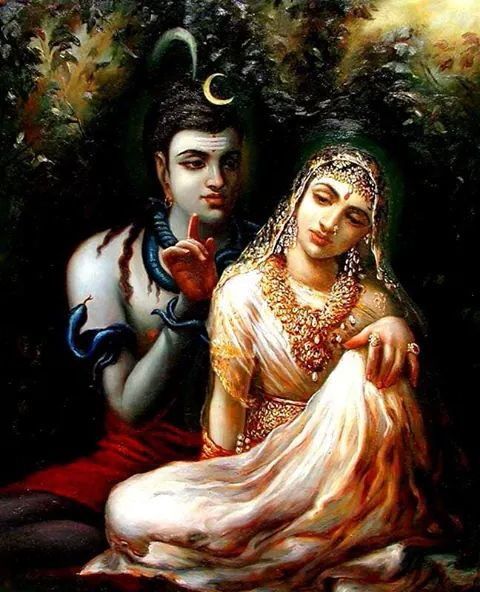
The Vijñāna Bhairava Tantra is a seminal text of Kashmir Śaivism, belonging to the Trika lineage of nondual Śaiva Tantra. The Tantra is found as an appendix attached to the broader Rudrayāmala Tantra, framed as a dialogue between Bhairava (Śiva) and Bhairavī (Śakti). It presents 112 practical contemplative methods for directly realizing the nature of consciousness, ranging from breath and sense awareness to energy, sound, and sexual union.
Unlike the highly ritualistic Krama or Kaula tantras, it emphasizes immediate, experiential entry into nondual awareness, making it a cornerstone of Trika meditation and philosophy widely commented on by masters such as Abhinavagupta.
Verse 69; Practice 41: Absorption into Shakti Through Consecrated Sexual Intercourse
Prone to being leveraged by some teachers of neo-tantra, students of the tradition might take great interest in contemplating the layered meanings of the verse itself, as well as each word of the verse. Note: The fifth translation has left out any overt sexual connotation whatsoever.
Verse 69: Śaktyāveśa
śakti-saṃgama-saṃkṣubdha-śaktyāveśāvasānikam |
yat sukhaṃ brahma-tattvasya tat sukhaṃ svākyam ucyate || 69 ||
(Transl. Wallis)
Word-by-word translation:
śakti = energy, power, consort, yoginī; saṃgama = union, coming together; saṃkṣubdha = stimulation, excitation, arousal, activation; śakti = energy, power, consort, yoginī; āveśa = immersion, entry, penetration, absorption; avasānika = conclusion, termination, culmination, completion; yat = which; sukha = pleasure, happiness, bliss; brahma-tattva = the Principle of the Absolute; tat = that; svākya = innate, one’s own, pertaining to oneself.
Five Translations and Two Renderings
- The stimulation caused by union with a consecrated partner (śakti) gives rise to a pleasure which culminates in immersion into [pure] Energy (śakti); that is the joy of the Principle of the Absolute (brahman) [itself]; [and] that is said to be the pleasure innate [to all humans]. (Wallis)
- At the time of sexual intercourse with a woman, an absorption into her is brought about by excitement, and the final delight that ensues at orgasm betokens the delight of Brahman. This delight is (in reality) that of one’s own Self. (Singh)
- The bliss (sukha) that culminates (during orgasm) with penetration into Śakti aroused by union with a woman (śakti) is that of the Brahman which is said to be one’s own (inherent) bliss. (Dyczkowski)
- The delight experienced at the time of (sexual) union when the female’s energy is excited and when the absorption into her is completed, is similar to the spiritual bliss (lit. the bliss of Brahman) and that bliss is said to be that of the Self. (Bäumer)
- By the union with shakti there is excitation and in the end, one is absorbed into shakti. That bliss (of union) which is said to be the nature of Brahman (ever-expanding consciousness), that bliss is (in reality) one’s own self. (Satsangi)
- When you practice a sex ritual, let thought reside in the quivering of your senses like wind in the leaves, and reach the celestial bliss of ecstatic love. (Odier)
- When in such embrace your senses are shaken as leaves, enter this shaking. (Reps)

Bhoga and Moksha, Energy and Emptiness: A Brief Note on Sexual Yoga and the Two Mudras in Tantric Buddhism—Ben Joffe
Bhoga: “enjoyment,” “experience,” or “consumption.” Material / Sensory: Pleasure or enjoyment derived from worldly things, such as food, wealth, or sensual experiences. The experience of bliss, pleasure, or energy in the body or subtle channels.
Moksha: “liberation”, “release”, “emancipation,” or “freedom from bondage”.
Dr. Ben Joffe is a cultural anthropologist and scholar-practitioner specializing in Tibetan Buddhism, particularly its tantric traditions. His PhD focus on non-celibate tantric ritual specialists and their roles in contemporary Tibetan communities, including the diaspora, bridges academic research with practice, exploring intersections of Tibetan esotericism, magic, and neo-paganism. Jeff serves as editor and translator at Sky Press.
“(In a) short upadesha, esoteric instruction, by the great Indian siddha Tilopa on Mahamudra, the ‘Great Seal’, or Tibetan Tantric Buddhist practice of recognizing the all-pervasive, spontaneously accomplished, primordially present, utterly unelaborated and effortless nature of mind-as-it-is, Tilopa notes that, if practitioners’ meditation practice lacks vital energy, and provided they have the proper training that enables them to perform this properly, practitioners may make use of tantric sexual yoga with a physical partner as an adjunct to their practice.
If you practice with a Karmamudra or physical tantric sexual yoga partner the primordial wisdom or gnosis of bliss-emptiness will shine forth. With Means and Wisdom consecrated (i.e. the yogi and yogini consorts) let them enter into Union. Let (the thigle/bindu) drop down slowly and gently, hold it*, reverse its flow pulling it upwards, then let it pervade throughout the body. Do that without any desirous fixation or grasping and the primordial wisdom of bliss-emptiness will shine forth. Your lifespan will lengthen, you will not have grey hair and your life force will increase like the moon. Your complexion and inner radiance will be clear and strong like a lion’s. You will quickly obtain the ordinary siddhis or accomplishments and should then apply yourself to the supreme goal [of complete Buddhahood]”
**Other translations of Tilopa’s text suggest an analogous reading of this line viz. ‘reverse the mandala pulling [up]’, appropriate as the fourfold sequence of ‘dropping down/descending; ‘holding/retaining’]; reversing; and ‘spreading out’ are fairly standard as part of the inner subtle energy procedures involved in many tantric Buddhist sexual yoga practices.
This statement coming at the very close of Tilopa’s exposition of Mahamudra is interesting. In a few very short lines, Tilopa provides a complete overview of the subtle body inner alchemical steps involved in common forms of sexual yoga practice in Tibet, and identifies some of the immediate more ‘this-worldly’ or ordinary results of such practices.
Here Tilopa alerts us to the fact that at least in his time and context, tantric sexual yoga with a physical partner was seen as fulfilling what we might call bhoga goals of worldly or interim success, fulfilment and enjoyment as a support for the ultimate goal of complete Buddhahood/liberation in this life. The sub-text here is that some students may find that their success with more direct, unelaborated approaches like Mahamudra is limited either due to their lack of energetic vitality or compromised health and longevity.
Tilopa thus acknowledges that for those who knew how to engage in sexual union with the proper View and without succumbing to grasping and attachment to conceptual reification – and that’s a big qualification, mind you! – such a practice could stabilize and energize their practice of (to borrow a term from the Shaiva context) the more ‘Shiva’-oriented path of Mahamudra.
The crucial point here is that early, authoritative Vajrayana commentators understood Karmamudra to be intrinsically connected with Mahamudra. These days, oral and written Tibetan Buddhist teachings on Mahamudra are not hard to find, but they are rarely taught in relation to the complex, demanding, and still widely secret and misunderstood energy body practices of Karmamudra.
In the twelfth century cycle of Vajrayana teachings known as the Yuthok Nyingthik or ‘Yuthok’s Heart-Essence’, which is uniquely pitched at householder tantric yogi/ni-physician practitioners, pith instructions on Mahamudra are included in the section outlining Karmamudra practice right at the conclusion of these instructions.
The text provides detailed instructions on various levels of sexual yoga practice: preliminary training with ones own body and an imagined partner more accessible methods for those without the intensive energy body training and cultivation typically required to engage in Karmamudra and more typical Completion Stage classic Karmamudra methods.
The texts present Karmamudra as a stand alone practice that if properly executed can give way to complete liberation in this life. More specifically, the text describes advanced Karmamudra practices which very unusually can produce the rainbow body, a result usually associated with Dzogchen thögal practices and not Karmamudra.
Whatever the case, Karmamudra of whatever sort is a method aimed at enabling the recognition and stabilizing of the ultimate nature of mind and reality, what Tilopa above calls following tradition ‘the primordial wisdom or direct gnosis of inseparable bliss-and-emptiness.’ As such, Karmamudra without Mahamudra can only ever amount to bhoga and not moksha to return to slightly more Shaiva parlance.
Yet, as we see, at least historically, Karmamudra was strongly valued by Vajrayana lineage masters as a means to actualize and stabilize Mahamudra too, a pattern that is incidentally also readily apparent in the structure and internal logic of the different phases of empowerment in Highest Yoga Tantra initiation.
At the end of his instructions on Karmamudra Yuthok explains that practitioners who are old and therefore have little vitality and sexual desire, who have ‘bad channels’, that is have problems or deficiencies with their energy body or who are intersex and therefore are unable or disinclined to engage in penetrative sex for the purpose of sadhana can happily forego the ‘Path of the Lower Gates or Chakras of Great Bliss’ ie Karmamudra, and can simply practice the Path of the Upper Gates of Complete Liberation or Mahamudra as a stand-alone technique without having to engage in any of the complex and potentially dangerous energetic practices associated with Shakti oriented sexual yoga.
This relationship between the two Mudras and Paths seems to have once been quite standard and normative but this appears to have changed somewhat. There are many complex reasons for this. It’s possible that the foregrounding of monastic tantric authorities and modes of practice over and above more decentralized householder ones had something to do with this.
It’s also true that as time went on and with the development and increased differentiation of Dzogchen or Ati Yoga great Perfection traditions in Tibetan Buddhist societies forms of sexual yoga sadhanas developed that offered more direct unelaborated methods for engaging in sexual sadhana that focused on the recognition and maintaining of pure awareness in the midst of sexual bliss and activity and less on complex manipulations of subtle energies, channels, chakras and energetic essences that are associated with years worth of intensive training in hatha yoga type practices of inner heat yoga, vajrolimudra, seminal retention and so on. On the few occasions when Tibetan teachers have taught sexual yoga methods in the West in recent decades it has usually been approaches based on these sorts of unelaborated Dzogchen style sadhanas that they have emphasized.

…is a natural mystic, Śaiva-Śākta Tantrika and Jñāna Yogī. David holds degrees in Eastern Philosophy and Semiotics, lives in Japan with his family, and works as an author and teacher of the wisdom traditions, devoting his time to developing science-based tools and programs that help people reach the fullest potential of the human condition. This site is the legacy of the Himalayan Ashram—Uma Maheshwara Yoga & Ayurveda (UmaMaYA).
Would you like to share this article?

Discover more from REAL YOGA
Subscribe to get the latest posts sent to your email.